

If you’ve looked for a virtual physical therapy job, you’ve probably run into this: the company wants someone who already has telehealth experience.
Helpful, right?
You’re a licensed PT. You evaluate patients, make clinical decisions, and teach people how to manage their symptoms. But getting someone to give you that first virtual opportunity can still be frustrating.
I work in telehealth now, but I didn’t start by landing the full-time position I wanted. My way in was a 1099 contractor role.
That’s an option I think more PTs should consider.
You may not need to make the whole jump at once
A full-time remote job might be your goal, but it doesn’t have to be your first move.
A contract opportunity can let you keep your current job while getting involved with a virtual company. Depending on the role, you may get exposure to its onboarding, technology, documentation, and approach to care before you build much of a caseload.
And yes, accepting a legitimate contractor position gives you a role you can put on your resume—even if your schedule hasn’t filled yet.
Be accurate about it. Joining a company, completing training, and treating patients are different things. Describe what you’ve actually done. You don’t need to turn an empty schedule into an imaginary caseload.
But you also don’t have to wait until you’ve treated hundreds of virtual patients before acknowledging that you’ve taken a step into the field.
Don’t overlook the skills you already use
Think about the last patient who needed you to explain an exercise three different ways before it clicked.
Or the person who wasn’t doing their home program until you figured out why.
Or the patient whose history made you stop and reconsider whether PT was the right next step.
Those are useful examples when you’re talking to a virtual employer.
A lot of outpatient PT experience translates. You still need to ask good questions, recognize when something doesn’t fit, explain your reasoning, and help someone follow a plan outside the clinic.
What changes is how you do that through a screen.
Before rewriting your entire resume, pick one patient interaction you could comfortably discuss in an interview. Leave out identifying details. Explain what was happening, what you noticed, what you changed, and how the patient responded.
That gives you more to talk about than “I’m a good communicator.”
Read the contract before you get excited about working from home
A 1099 opportunity isn’t automatically a good opportunity.
Find out how much availability they expect and whether any hours or patient volume are guaranteed. Ask what happens when someone cancels, whether training and documentation are paid, and who covers licenses and malpractice insurance.
A role that fits around your current job can be a useful starting point. One that demands a large block of unpaid availability may be harder to justify.
You’re allowed to be interested in the opportunity and still ask direct questions.
A quick word about 1099 taxes
One thing that’s easy to overlook with 1099 work: the money hitting your account generally hasn’t had taxes taken out. Don’t treat the whole deposit as spending money. You’re responsible for income taxes and self-employment tax, so plan to set some aside.
Here’s a useful detail if you’re keeping your regular W-2 job: increasing withholding from that paycheck may cover the additional taxes instead of making separate quarterly estimated payments. Have a tax professional help you work out the amount. And when comparing offers, remember that a $60 contractor rate and a $60 employee rate aren’t financially equivalent.
IRS guidance on managing taxes for independent contract work. Your own tax situation determines what you need to pay.
Give yourself more than one way in
My contractor role helped me get started. It isn’t the only way to do it, and some therapists will be able to go straight into full-time virtual work.
But if you’ve only been applying to full-time positions and getting nowhere, it may be worth widening the search.
You don’t necessarily need another year of preparation. You may need a smaller first opportunity.
Ready to make your move into virtual PT?
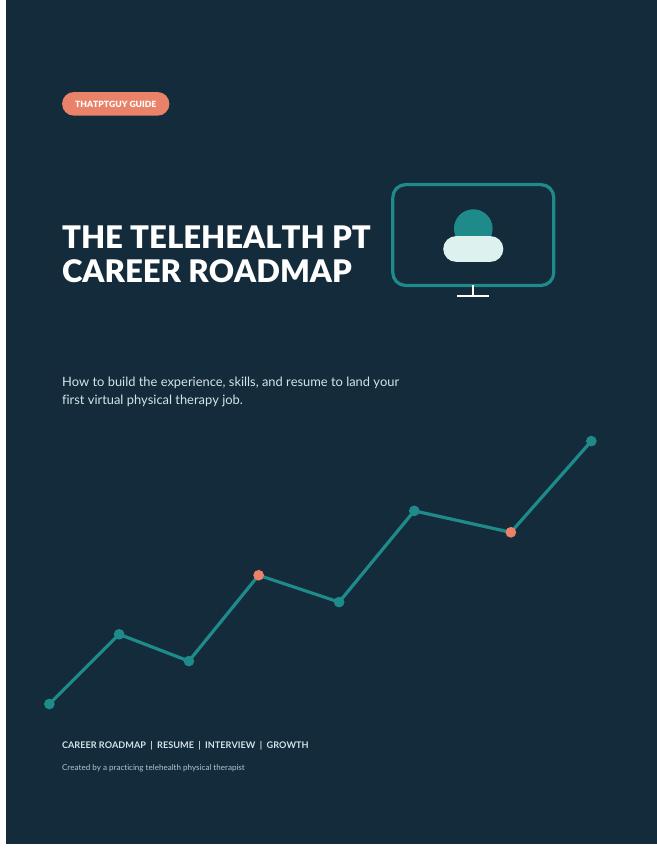
I put more of what I learned into The Telehealth PT Career Roadmap—the guide I would have wanted when I was trying to figure out how to get started.
For $9.99, you get a 27-page PDF and five printable planning worksheets covering routes into virtual work, resume positioning, interview preparation, questions to ask employers, and your next career steps.
Use it to identify where you stand, decide what to work on, and put your next steps on paper.
See the full description and preview images on Etsy. Instant digital download; no physical product.
This guide offers career education and planning support. It does not guarantee employment, income, or advancement.
Also reading: Side Hustles for Physical Therapists: Which Options Fit Your Time and Goals?
Benjamin Harris, DPT · ThatPTGuy


Leave a Reply