
FROM MY PT SCHOOL NOTES · NEUROLOGY · UNIT 4 · CHAPTER 13
How are brain injury severity, consciousness and recovery described?
Traumatic brain injury (TBI) can affect brain tissue, attention, awareness and physical function in very different ways. Learn what injury terminology and initial severity scores do—and what they cannot tell you about a person’s future.
Understand the clinical picture
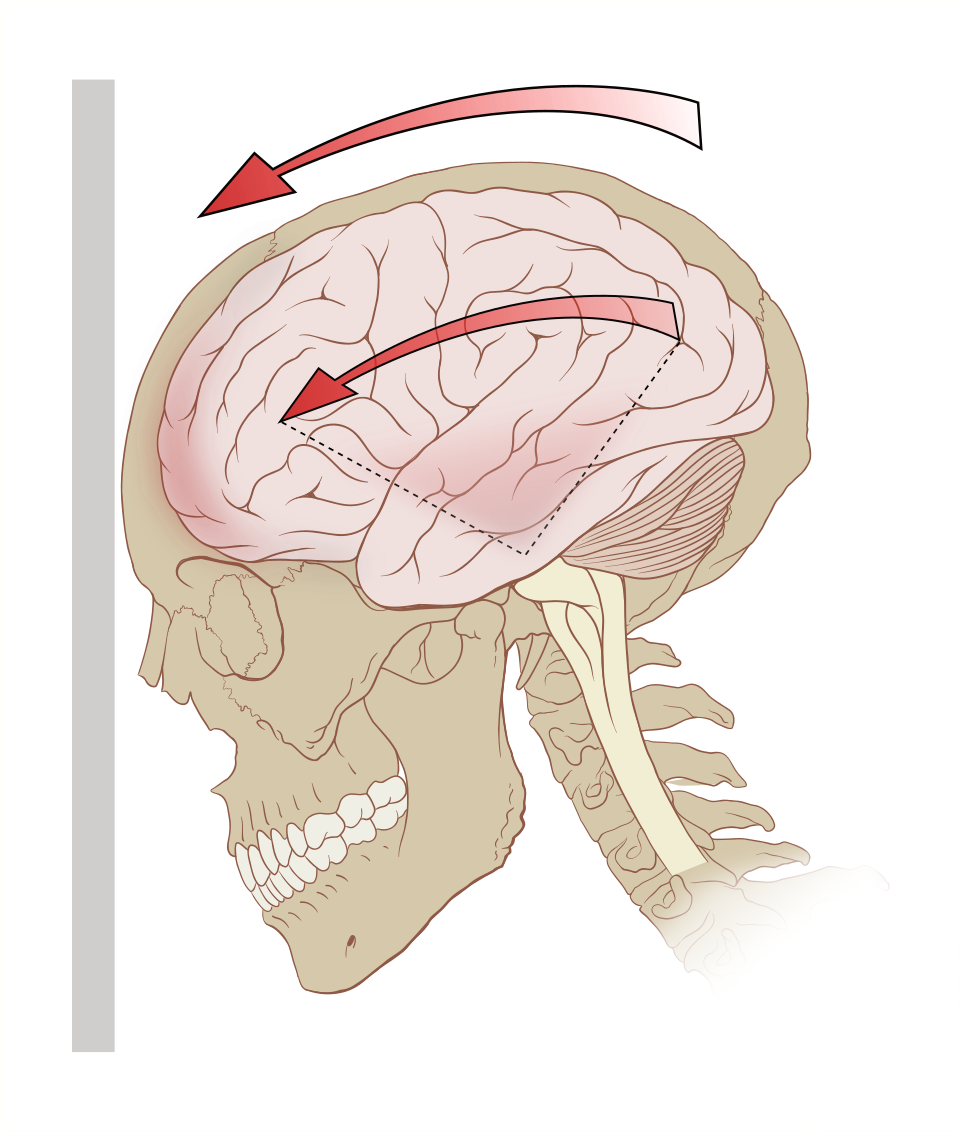
What causes injury—and what changes afterward?
An external force may produce focal injuries, including contusions and intracranial bleeding, or more distributed axonal injury. Acceleration, deceleration and rotational forces can stretch axons; secondary complications, such as swelling, oxygenation problems or systemic injury, can further alter neurologic function. The initial medical assessment determines what is happening and whether urgent stabilization is needed.
A concussion is a form of mild traumatic brain injury, but a patient may have meaningful symptoms without a visible abnormality on routine CT. Conversely, a person can have a severe intracranial injury despite a relatively unimpressive early complaint. PT students must not infer the absence of injury from a normal scan.
Understand the Glasgow Coma Scale (GCS)
The GCS describes eye opening, verbal responses and motor responses, recorded by trained clinicians. The conventional total ranges from 3–15; the familiar initial categories are often 13–15 mild, 9–12 moderate and 3–8 severe. These are initial classification aids, not a direct measure of future walking, cognition or participation.
Report components whenever possible. An intubated or sedated patient cannot necessarily complete all components; a missing or untestable verbal response should not be silently scored as normal or zero. Review the official GCS guidance rather than using a copied scale as a self-training worksheet.
Consciousness and post-traumatic amnesia
Consciousness includes arousal and awareness. Coma generally lacks wakefulness and purposeful awareness; unresponsive wakefulness syndrome (UWS) describes wakefulness without reliable evidence of awareness; a minimally conscious state involves limited but reproducible signs of awareness. These states require careful specialist assessment and repeat observation.
Post-traumatic amnesia (PTA) describes a period of impaired ongoing memory/orientation after injury and can inform severity and recovery tracking. An isolated behavior or one caregiver report does not establish a formal disorder of consciousness. Modern AAN/ACRM guidance recommends managing confounders and serial standardized assessment.
Quick reference
| GCS | Describes observable eye, verbal and motor responses; not a stand-alone prognosis |
| PTA / memory orientation | Tracks recovery of new learning and orientation; context matters |
| Rancho cognitive levels | Communicates broad cognitive-behavioral patterns for rehabilitation, not a rigid timeline |
| Functional tasks | Show actual assistance, balance, communication and participation needs |
What changes for PT?
Connect terminology to what must be tested next. A patient with a low initial GCS may later improve substantially, and a patient with ‘mild’ injury may still need structured follow-up. The immediate PT contribution is safe observation of posture, movement, function, communication, tolerance and response to environmental demands in the appropriate setting.
Clinical reasoning case
A patient was intubated after a severe injury. The referral says GCS 7, yet today they follow one-step commands and maintain supported sitting. Does the historical GCS alone determine your treatment goals?
Reasoning: No. Confirm current medical status, communication and reproducible response, then evaluate appropriate functional tasks. An acute score describes a time point and cannot replace today’s assessment.
Check your understanding
How would you distinguish an initial injury severity label from a description of current functional and cognitive status?
Original uploaded sources: 1 TBI Diagnosis and Pathology.pdf; 1 Glasgow Coma Scale .pdf; Rancho Los Amigo LOCF Guidelines.pdf (original file is not reliably machine-readable). Historical note: Older course notes use some older disorder-of-consciousness terms and an eight-level Rancho model. Compare your class notes with current disorders-of-consciousness guidance, official GCS instructions and the appropriate Rancho version. These are independently organized PT-school companion lessons, not individualized medical care or emergency instructions.


