
FROM MY PT SCHOOL NOTES · CARDIOPULMONARY · CHAPTER 2
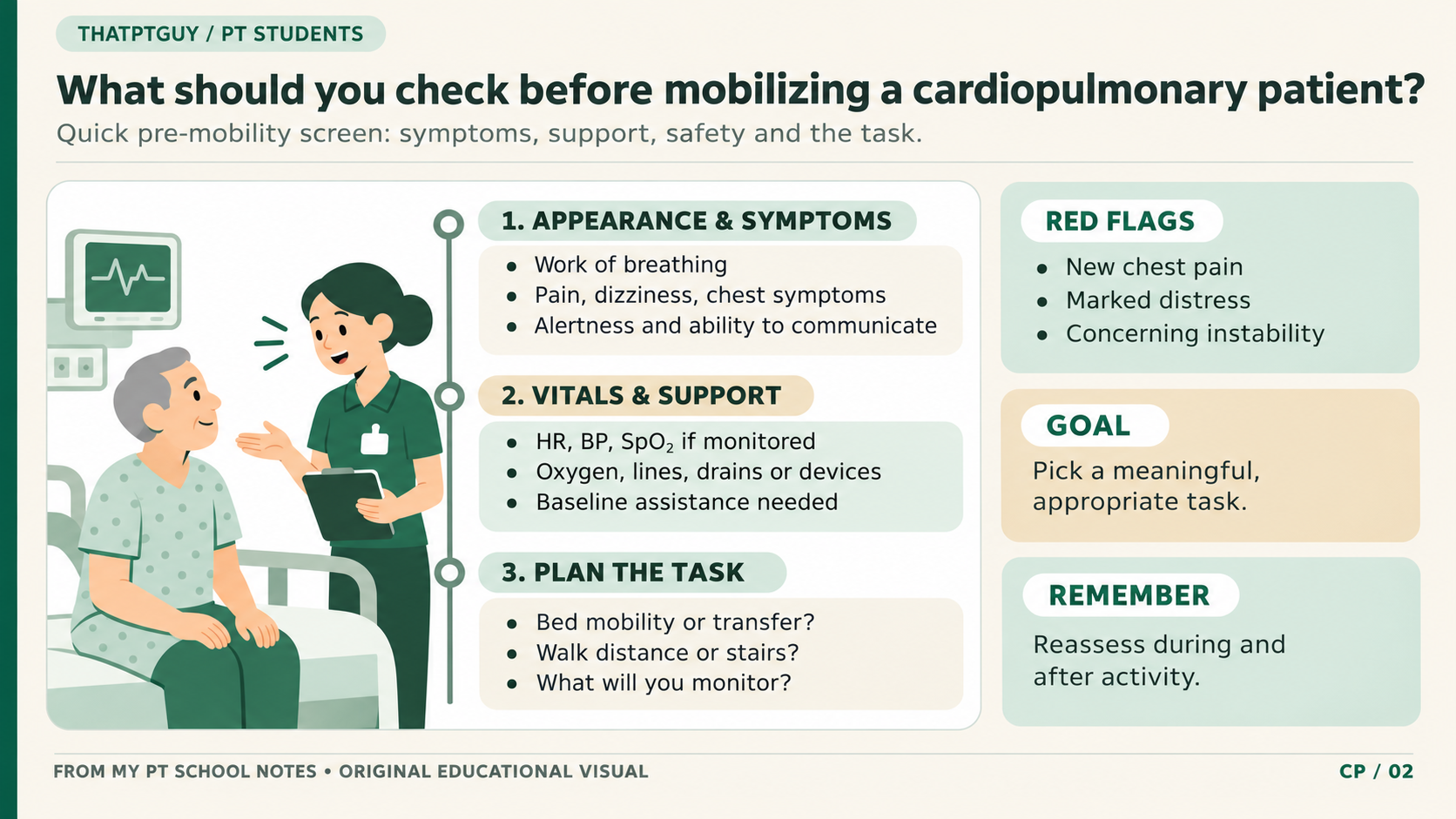
What Should You Check Before Mobilizing a Cardiopulmonary Patient?
A cardiopulmonary examination should help answer a practical question: what does this person need, and what might make today’s activity inappropriate?
1. Let the history determine what to assess
Connect the reason for referral with symptom changes, medical history, relevant tests and medications, oxygen or respiratory support, current activity restrictions and the patient’s own mobility goals. A resting value is easier to interpret when you know the person’s baseline.
New chest discomfort, fainting, pronounced breathlessness at rest or an important clinical change requires appropriate assessment and escalation. An exercise order is not permission to ignore a new symptom pattern.
Is the same oxygen saturation value equally reassuring in every patient?
Reasoning: No. Signal quality, baseline, symptoms, supplemental oxygen needs and the overall clinical picture affect interpretation.
2. Observe before adding tests
Look at the patient’s ability to speak, work of breathing, posture, accessory muscle use, mental status, pallor or cyanosis, cough, edema and functional movement. Then choose the relevant vital signs and tests for the question at hand.
Examination findings should include response to activity and recovery. Note unexpected changes in respiratory rate, heart rate, rhythm where monitored, blood pressure, exertional symptoms, and perceived effort. Verify questionable measurements but do not dismiss a concerning patient as ‘artifact.’
Is a single normal pulse oximeter value enough to clear a patient for walking?
Reasoning: No. It cannot rule out other cardiopulmonary or medical problems, and there is no universal single-number clearance rule.
3. Choose tests that change a decision
Focused auscultation, assessment of cough and secretions, functional tests or balance measures should answer a clinical question. Chest imaging, stress testing, echocardiography, ABGs and pulmonary function tests may be performed by other professionals but still inform PT reasoning.
Document the task, level of assistance, symptoms, measurements when relevant and how the person recovered. Context helps the next clinician interpret the session.
If the patient is stable at rest, does that guarantee an appropriate response to exertion?
Reasoning: No. Activity can reveal limitation or a clinically meaningful change not seen at rest.
Apply it to a clinical situation
The bathroom goal: A patient asks to walk to the bathroom but reports noticeably worse breathlessness than yesterday while resting.
What matters most in this situation?
Reasoning: Reassessment and team communication come before initiating the walking trial. A meaningful goal does not override a new concerning change.
Common trap: Following a generic mobilization rule without assessing today’s status.
Source notes & learning scope
From my Foundations of cardiopulmonary examination materials: Chapter 16, Basic Systems Review Checklist and testing lecture. Confirm clinical procedures against current facility policy. These are my reorganized class notes with newly written educational examples. This lesson is not a care protocol, official class resource or NPTE guarantee.

