
FROM MY PT SCHOOL NOTES · MUSCULOSKELETAL · CHAPTER 10
Rotator Cuff Pain, Instability and Shoulder Stiffness
Similar pain locations can reflect very different loading, mobility and injury problems. Your pathology lecture contrasts these patterns rather than providing a single diagnosis from one sign.
Compare the symptom pattern
Gradual overhead-load pain with relatively preserved passive range differs from global painful passive restriction, traumatic sudden weakness or apprehension following prior dislocation. Each warrants a distinct examination and consideration of medical or cervical contributions.
Cuff function and shoulder loading
Supraspinatus contributes to elevation, infraspinatus and teres minor to external rotation, and subscapularis to internal rotation; all contribute to control of the humeral head. Actual reach also depends on scapular and trunk movement, task load and symptoms.
Identify the muscles in two anatomical views
The subscapularis is best viewed anteriorly; supraspinatus, infraspinatus and teres minor are shown posteriorly. Both figures are licensed OpenStax anatomy illustrations rather than interpretations of provocative test results. Tap to enlarge and read the labels.
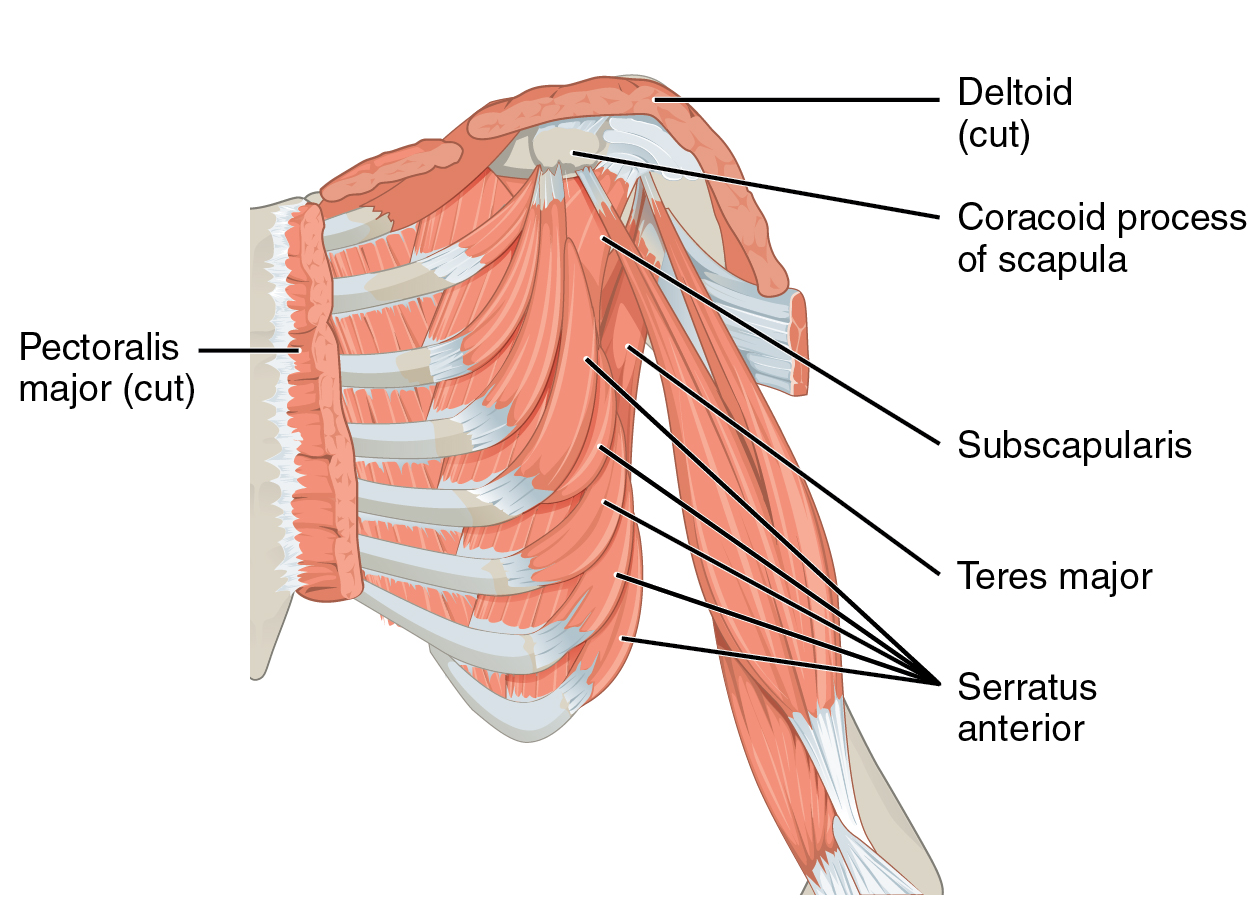
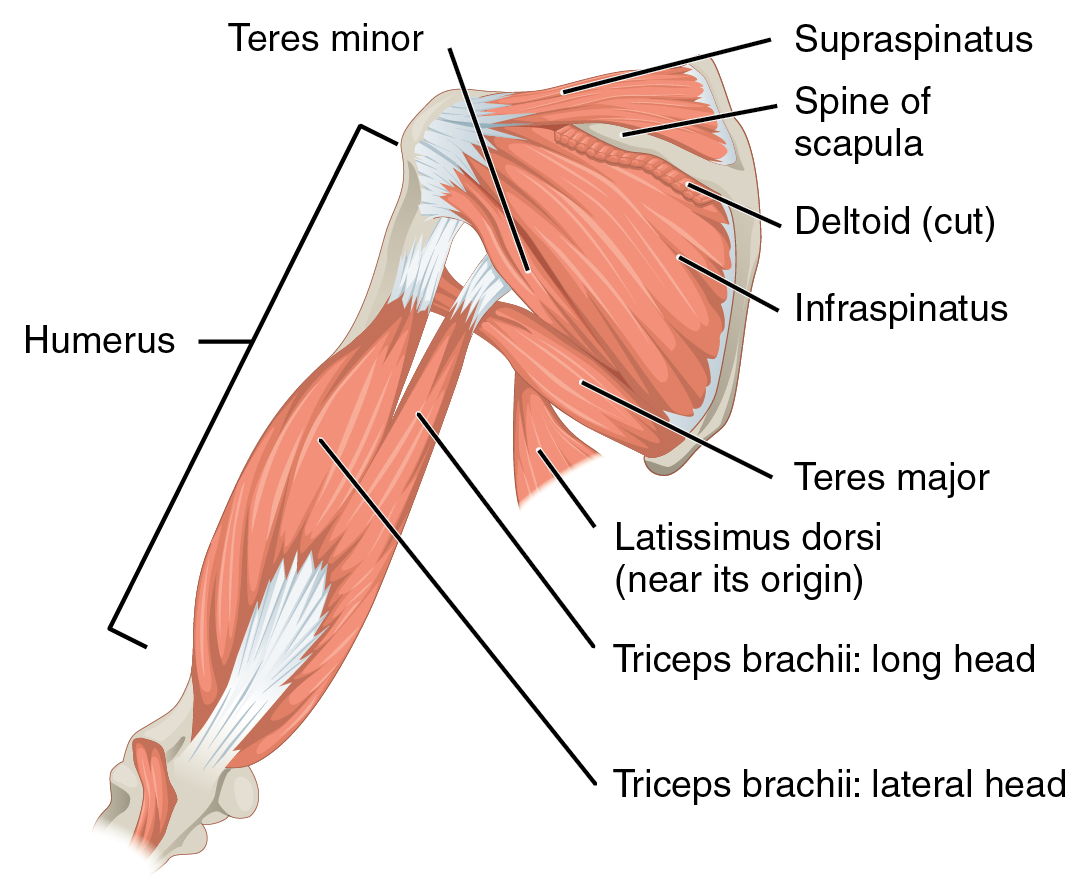
Source files: anterior and posterior. The two images are unmodified; illustrations do not replace clinical examination.
Current practice context — separate from the lecture
The 2025 JOSPT guideline addresses nonsurgical adult rotator cuff tendinopathy, including calcific tendinopathy and some partial-thickness tears. It explicitly excludes full-thickness tears. It emphasizes individualized active rehabilitation and appropriate selective imaging or specialist assessment instead of treating every painful shoulder as a confirmed tear.
Clinical reasoning, not a label
A positive impingement maneuver or axial traction/resisted-abduction response is not proof that a specific tendon or bursa is the pain generator. Record functional limitations and retest a relevant reaching or carrying activity.
Try a clinical decision
Patient A has markedly restricted passive ER; Patient B has full passive ROM but painful active resistance. Should both receive the same program?
Not necessarily. Patient A needs examination of global joint mobility and irritability; Patient B may need graduated loading and strength assessment. History, trauma and neurologic features can change both pathways.
Original course sources and limitations
Shoulder Pathophysiology; Shoulder Arthrokinematics; Shoulder Complex Lab. Updated guideline is additional outside evidence.
This lesson is distilled from my original PT-school notes, with current external guidance labeled separately. It is not an official course or a substitute for clinical examination and procedure-specific protocols.


