
FROM MY PT SCHOOL NOTES · MUSCULOSKELETAL · CHAPTER 13
Wrist and Hand: More Than Grip Strength
Hand function needs joint motion, thumb position, sensation, tendon coordination and precision—not just maximal gripping force.
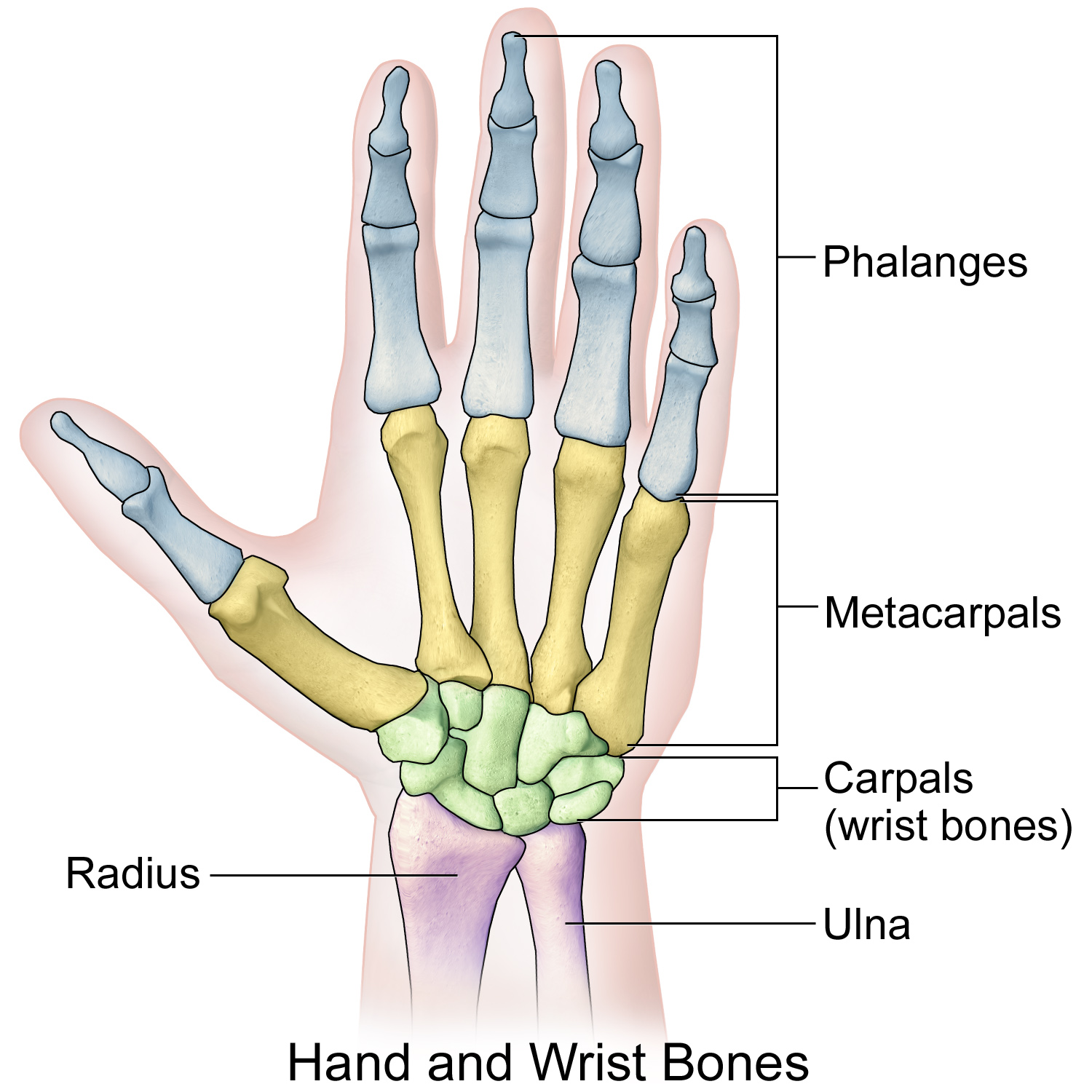
From the wrist and hand lectures
Your course covers eight carpal bones, intercarpal and carpometacarpal joints, thumb CMC mechanics, TFCC, ligaments, nerve entrapments and functional grasp/pinch. The lab also assesses nail/skin changes, atrophy, forearm rotation and wrist/digit range.
Make the examination task-specific
Compare opening a jar, turning a key, managing buttons or a coin, keyboard use and lifting. Record pain, motion, pinch/grip performance, sensory findings and hand dexterity. Provocative Finkelstein, Tinel or Phalen testing may contribute to a hypothesis but is not a unique diagnosis.
Distinguish two classic deformities
Boutonniere posture involves PIP flexion with DIP hyperextension, often associated with central-slip/extensor mechanism dysfunction. Swan-neck posture is PIP hyperextension with DIP flexion and can occur through several mechanisms. An acute suspected tendon injury requires tissue-specific assessment.
Be careful with old postoperative timelines
The original pathology notes include fixed flexor-tendon and splint schedules. Those depend on repair type, tendon zone, surgeon/hand therapist guidance and healing, and are not safe universal instructions.
Try a clinical decision
A patient demonstrates strong gross grip but cannot pick up and turn a small coin. What should you test next?
Look at sensation, thumb opposition, precision pinch, digit ROM, pain, tendon coordination and the exact task. A grip score does not measure all manipulation demands.
Original course sources and limitations
Wrist Hand Lecture; Wrist Hand Pathology; 3 Wrist Hand Lab; Hand Goniometry Lab Chart. Hand illustration copyright as credited.
This lesson is distilled from my original PT-school notes, with current external guidance labeled separately. It is not an official course or a substitute for clinical examination and procedure-specific protocols.
Review external guideline or anatomy reference
← Previous · Upper-extremity unit
Continue: Next unit: Hip & Knee


