
FROM MY PT SCHOOL NOTES · MUSCULOSKELETAL · CHAPTER 20
Foot and Ankle Examination: From Motion to Function
The original foot and ankle lectures cover joints, ligaments, plantar fascia and clinical tests. The key is understanding how those structures contribute to walking, stairs, uneven ground and the person’s own task.
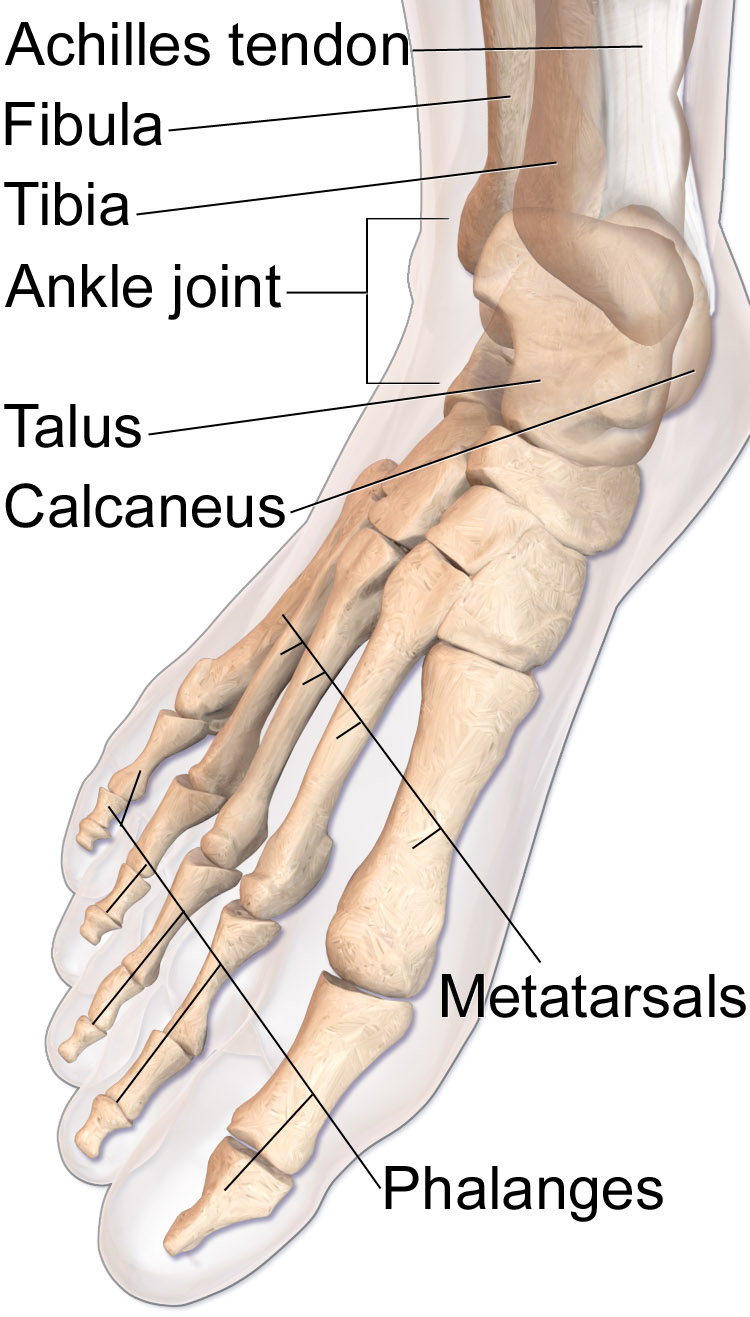
Think beyond just the ankle joint
Talocrural dorsiflexion and plantarflexion, subtalar/hindfoot mechanics, midfoot and first MTP function contribute differently to stance and propulsion. Your lecture describes the windlass effect as one mechanism supporting the foot in push-off.
Use the lab’s three observation lenses
Quantity: movement, heel-rise height or step distance. Quality: control and compensations. Provocation: reproduction of the patient’s familiar symptoms. Compare gait, loaded dorsiflexion, single-leg stance and heel-rise capacity as appropriate, then select targeted ROM, resistance and neural tests.
When an apparent flat foot is not a diagnosis
Some pronation is normal in gait. Arch appearance alone cannot tell you whether a person’s problem needs orthoses, strengthening or no intervention. Compare symptoms, flexible vs rigid presentation, task tolerance and other relevant regions.
Fracture screening only when appropriate
After acute ankle or midfoot trauma, the Ottawa ankle/foot rules can guide whether radiographs are indicated in a suitable patient. For malleolar-zone pain, the rule considers posterior-edge or tip tenderness at either malleolus or inability to bear four steps immediately and at evaluation; for midfoot-zone pain, navicular or fifth metatarsal base tenderness or the step criterion. Do not use this rule to classify chronic atraumatic pain.
Apply it to a patient
A hiker has midfoot discomfort and a low-looking arch but can walk normally on flat ground. What would you test?
Clarify history and red flags, then reproduce the hiking-like task, examine loaded movement, heel-rise performance, symptom behavior, footwear and functional goals. Do not prescribe an orthosis solely from the arch’s appearance.
Where the material comes from
Ankle & Foot lecture; Ankle & Foot Lab; Foot & Ankle Pathology; ankle/toe ROM sheet. The current adult Ottawa rule source is additional outside guidance.
Independent class-note companion based on the author’s PT-school learning materials. External references are separately identified. This lesson is not a validated diagnostic algorithm, patient-specific prescription, or an official examination study guide.


