
FROM MY PT SCHOOL NOTES · FUNCTIONAL ANATOMY & BIOMECHANICS · REGIONAL CHAPTER 11
Why Is Single-Leg Standing Demanding at the Hip?
The hip transfers load between the pelvis and leg. Standing on one leg makes that job especially clear.
Identify the moving relationship
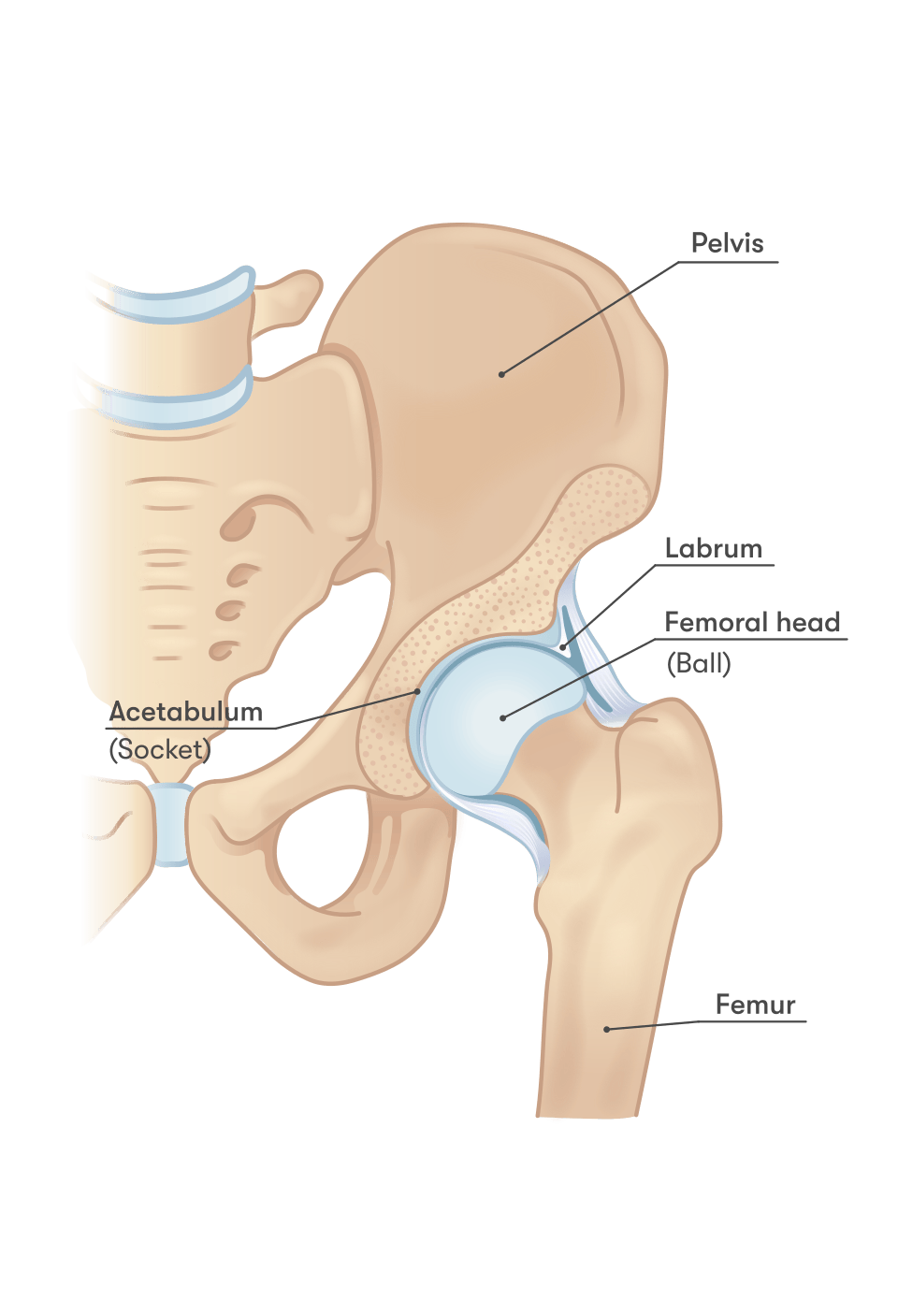
The hip lecture distinguishes femur-on-pelvis from pelvis-on-femur movement. The hip’s ball-and-socket structure allows motion in several planes while transferring force between trunk and limb.
Femoral version, joint capsule and ligament geometry influence available range and stability. The source introduces these as biomechanical considerations, not diagnoses from a single alignment observation.
Visual reference: hip joint structures
Understand the frontal-plane demand
During single-leg support, body mass creates an external moment about the stance hip. Hip abductor muscles contribute an opposing moment to manage pelvic orientation.
The lecture discusses the gluteal muscles and their changing moment arms. A one-legged task can change both external load and muscle demand as the trunk and pelvis shift position.
Connect it to walking and stairs
Compare level walking, single-leg balance and stepping onto a curb. The task, speed, base of support and trunk position change what the hip must accomplish.
An observed pelvic drop or trunk lean is a finding to investigate, not automatic evidence of one isolated weak muscle. Consider pain, balance, neural factors and function.
Quick check: Does moving the trunk over the stance leg necessarily mean hip abductor force demand is unchanged?
No. Changing the center of mass and external moment arm can change the moment the hip abductors need to counter.
Try the mechanics on a real task
Example: A patient stands on the right leg and shifts their upper body farther right over the stance hip. The mass of the trunk is unchanged.
Work through the reasoning
Answer: The change may shorten the frontal-plane external moment arm and reduce the required hip abductor moment. But the movement alone does not establish hip abductor weakness or explain symptoms without assessment.
Common trap: Interpreting every lateral trunk lean as one isolated muscle deficit. Remember: Hip moments depend on the line of force relative to the joint axis.
Course basis: Hip lecture.pdf from my original FABIO folder. This is paraphrased teaching content, not a complete regional anatomy reference or diagnosis algorithm. Third-party textbook diagrams are intentionally omitted.


