
When knee pain makes the stairs, a walk, or getting up from a chair harder, a diagnosis of osteoarthritis can leave you wondering how much you should move. A useful starting point is a plan that fits your current symptoms and the activities you want back.
Free illustrated guide: Download the five-page Knee Osteoarthritis Guide with five illustrated movements, easier alternatives, starting examples, walking and cycling guidance, and a progress worksheet. No purchase or email signup required.
What knee osteoarthritis means
Osteoarthritis (OA) can involve cartilage, bone, the joint lining, and other tissues. Describing it only as a knee wearing out misses part of the picture. Pain with activity, stiffness after rest, swelling, and changes in movement can occur, but the pattern varies. NIAMS: Understanding OA.
Imaging findings do not always match symptoms. Your examination, function, and goals matter alongside any scan. MedlinePlus: Osteoarthritis.
Start with one activity you want to improve
Pick something concrete: standing up from your usual chair, walking through a store, or managing the front steps. Describe what happens now and what you want to do more easily. Bring that example to your PT so progress can mean something beyond an exercise count.
Strength and regular activity are useful foundations
A program can combine strengthening with activity such as walking, cycling, or pool exercise. Weight management, when appropriate and wanted, may also help symptoms. Your clinician can tailor these options. NICE: OA management recommendations.
Five movements to discuss with your PT
These examples match the order in the PDF. Choose a manageable starting point; you do not need all five on the first day.
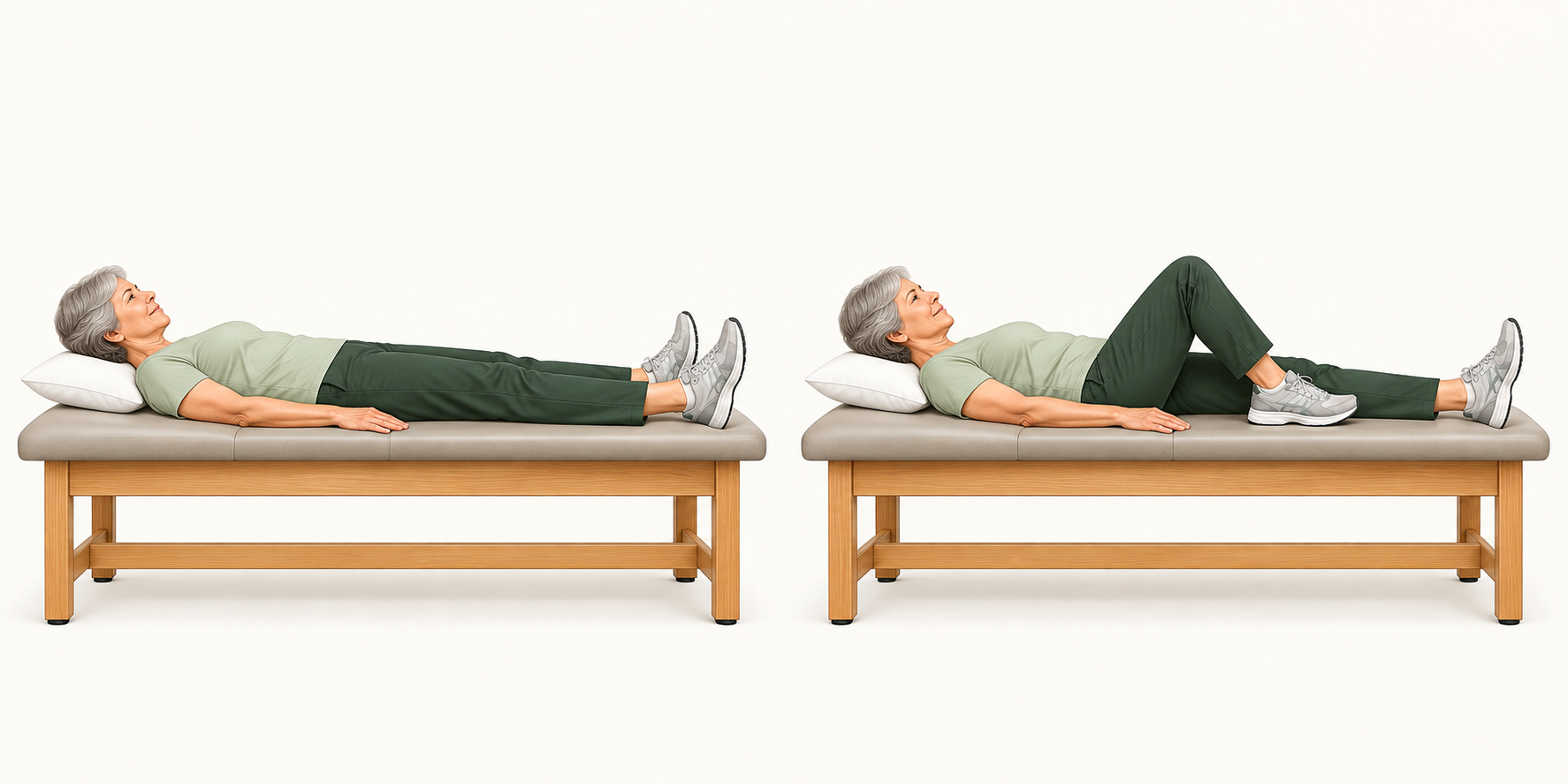
1. Heel slide
On a firm bed or treatment table you can get on and off safely, slide one heel toward your bottom, then back. Keep the heel supported. A smaller bend is an easier option.
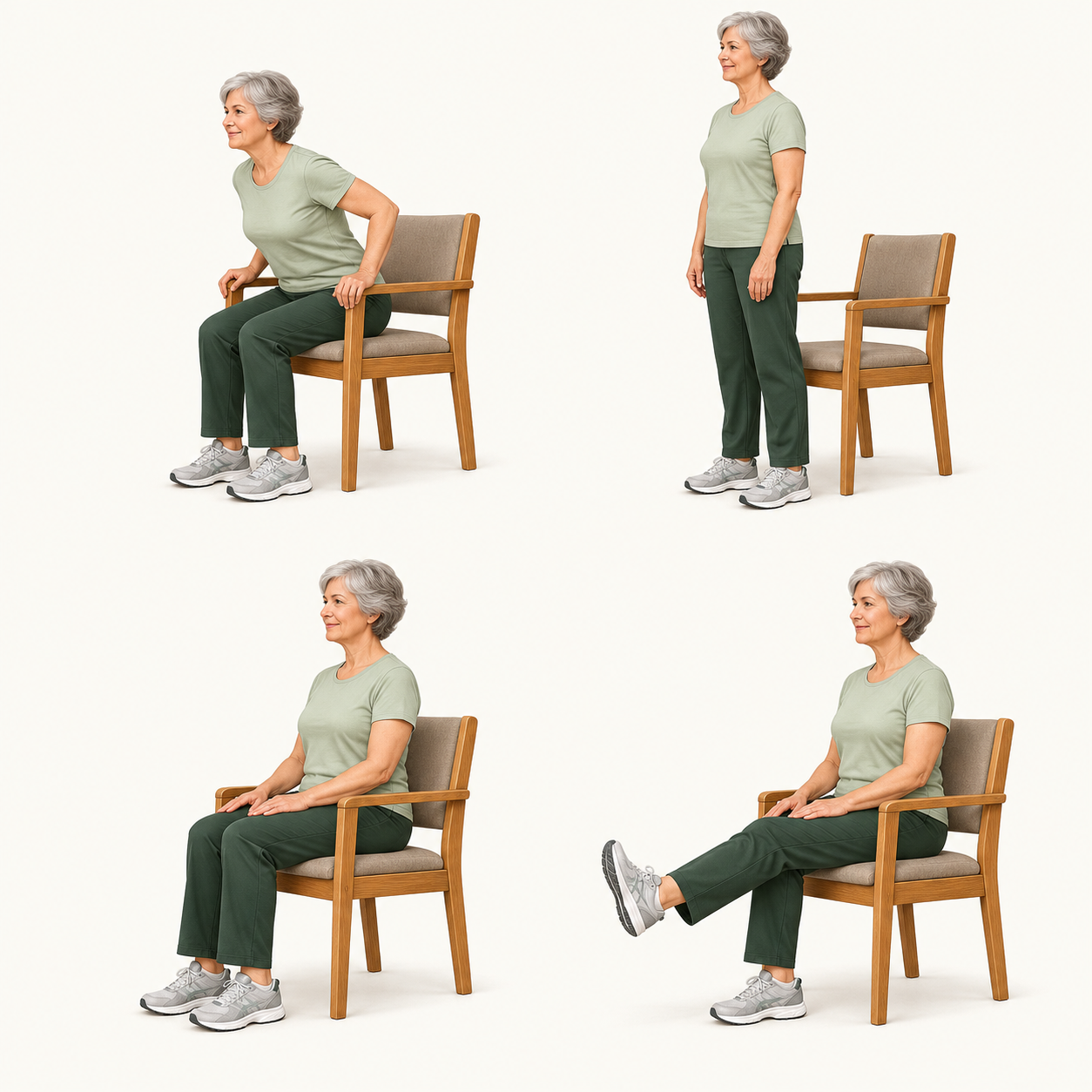
2. Seated knee straightening
Sit tall and slowly straighten one knee within a comfortable range, then lower it. Keep your thigh on the chair. Use a smaller movement if needed.
3. Sit to stand
Use a sturdy chair against a wall. Bring your feet under you, lean forward, and rise, using the armrests as needed. Sit down with control. Use a higher, firm seat or get assistance if needed.
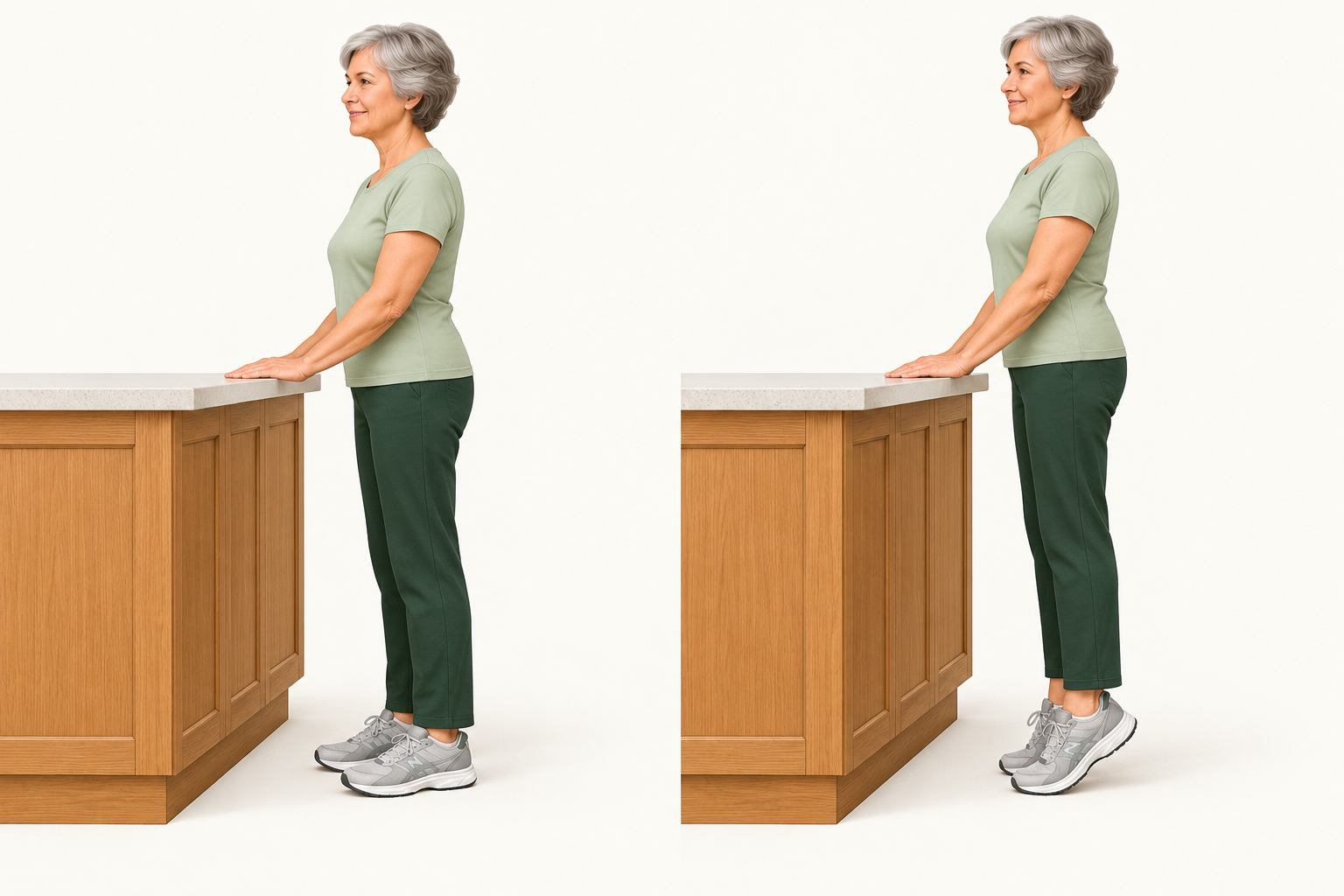
4. Supported heel raise
Hold a fixed counter. Lift both heels while keeping your toes down, then lower slowly. Lifting your heels while seated is an easier option.
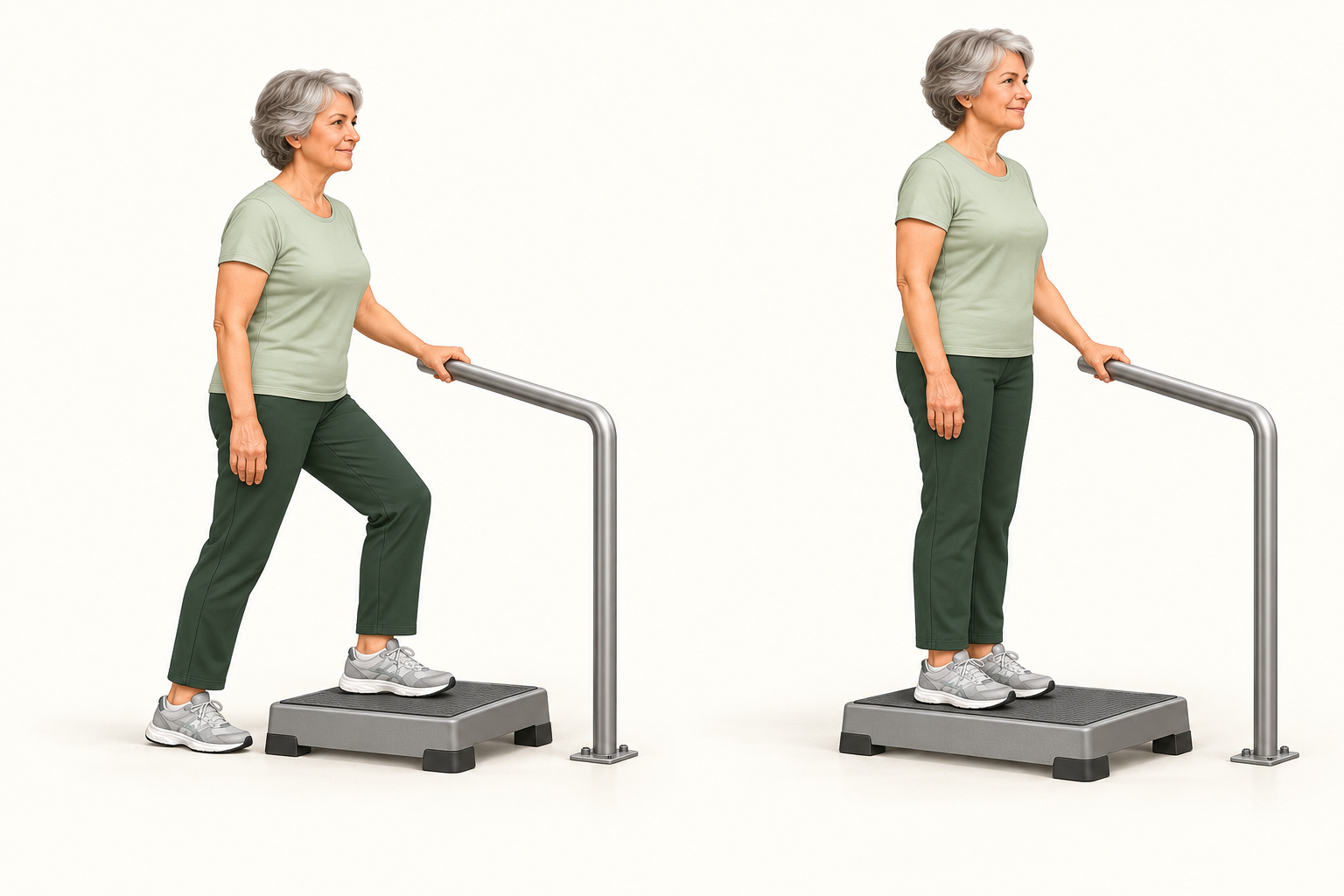
5. Low supported step-up
Hold a fixed rail, put one whole foot on a low, stable step, and step up. Return slowly with support. An easier option is tapping one foot onto the step and back without lifting your body. Skip this if the setup feels unsafe.
The PDF includes adaptable starting amounts and progression guidance. Begin below the examples if needed, and have your PT adjust the plan for your symptoms, balance, and medical history.
Add walking or stationary cycling
Try a brief bout on a level walking route or a stationary bike with low resistance. The guide gives 2-5 minutes as a starting example; shorter is fine. Use equipment you can get on and off safely.
Build gradually after several manageable sessions. Longer-term activity targets are something to work toward, rather than a starting requirement. CDC: Physical activity and arthritis.
Exercise examples are also described by the Royal Orthopaedic Hospital. Example starting amounts in this guide are educational suggestions to individualize with your PT.
How to adjust when symptoms flare
Temporarily change the amount rather than forcing the same session: reduce repetitions, range, resistance, or walking time. Check afterward and the next morning. Exercise should not make your knee pain worse overall; if it does, scale back and ask your PT about persistent problems. NHS inform: Exercise and symptom response.
Other treatment options
Selected supports, medication, or injections may help some people participate more comfortably. Discuss the benefits and risks with your clinician. Knee replacement can be considered when symptoms seriously affect life and suitable nonsurgical care has not helped or is unsuitable. Arthroscopic washout is not a routine treatment for OA. AAOS: Treatment options; NICE recommendations.
When to get checked promptly
Get urgent medical advice for a hot, red knee with fever or feeling unwell, inability to bear weight, major swelling or deformity, or a knee that locks and cannot straighten. These should not simply be assumed to be OA. NHS: Urgent knee symptoms.
Choose your next step
Use the expanded illustrated guide to choose manageable movements, record a starting amount, and check how your knee responds the next morning. Bring it to your next appointment.
By Benjamin Harris, DPT · Reviewed October 26, 2026. General education for adults with diagnosed knee OA; not an individual treatment prescription or a post-surgery protocol.


Leave a Reply