
The first steps out of bed can be the hardest part of the day when your heel hurts. Plantar fasciitis is one possible cause, but a familiar symptom pattern is a reason to get assessed, not a diagnosis on its own.
Free four-page guide: Download the illustrated Plantar Fasciitis Guide for stretches, heel-raise options, starting examples, and a walking and symptom tracker. No purchase or email signup required.
Why the first steps may hurt
The plantar fascia is a strong band along the sole that helps support the arch. Symptoms often appear under the heel or into the arch after rest, ease with initial movement, and return after longer time on your feet. The condition is more complex than inflammation alone. East Lancashire NHS: Plantar fascia pain.
Your clinician usually starts with a history and examination. Imaging may help when another cause is suspected or symptoms are atypical; it is not always needed. A heel spur is not automatically the source of pain. AAOS: Plantar fasciitis and bone spurs.
Make mornings and workdays more manageable
Keep comfortable footwear nearby. If barefoot walking on hard floors aggravates your heel, reduce that exposure for now. Before standing, try a gentle plantar fascia stretch if you can reach comfortably. Break up longer periods on your feet with sitting or a comfortable alternative.
Think about the whole day: exercise, work, errands, and household tasks all contribute. A manageable exercise session may still be too much when added to an unusually busy day.
Stretch the plantar fascia and calf
The 2023 clinical practice guideline supports plantar fascia-specific and calf stretching, alongside strengthening and other individualized care. JOSPT: Heel pain guideline.
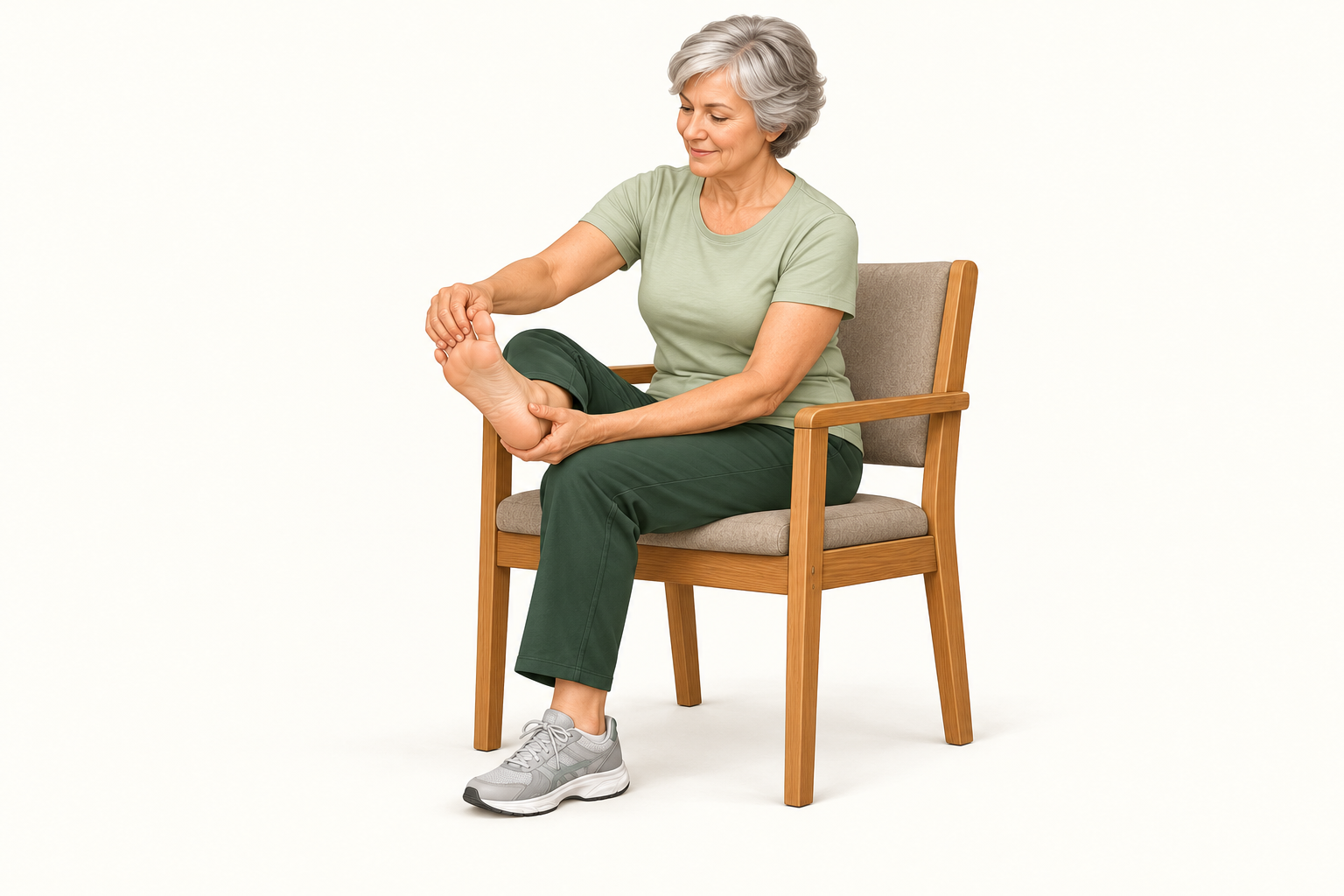
1. Plantar fascia stretch
Sit securely with the affected ankle resting across the opposite thigh if comfortable. Support the heel and gently draw the toes toward the shin until you feel a stretch along the arch. Ask for an alternative position if reaching strains your hip or knee.
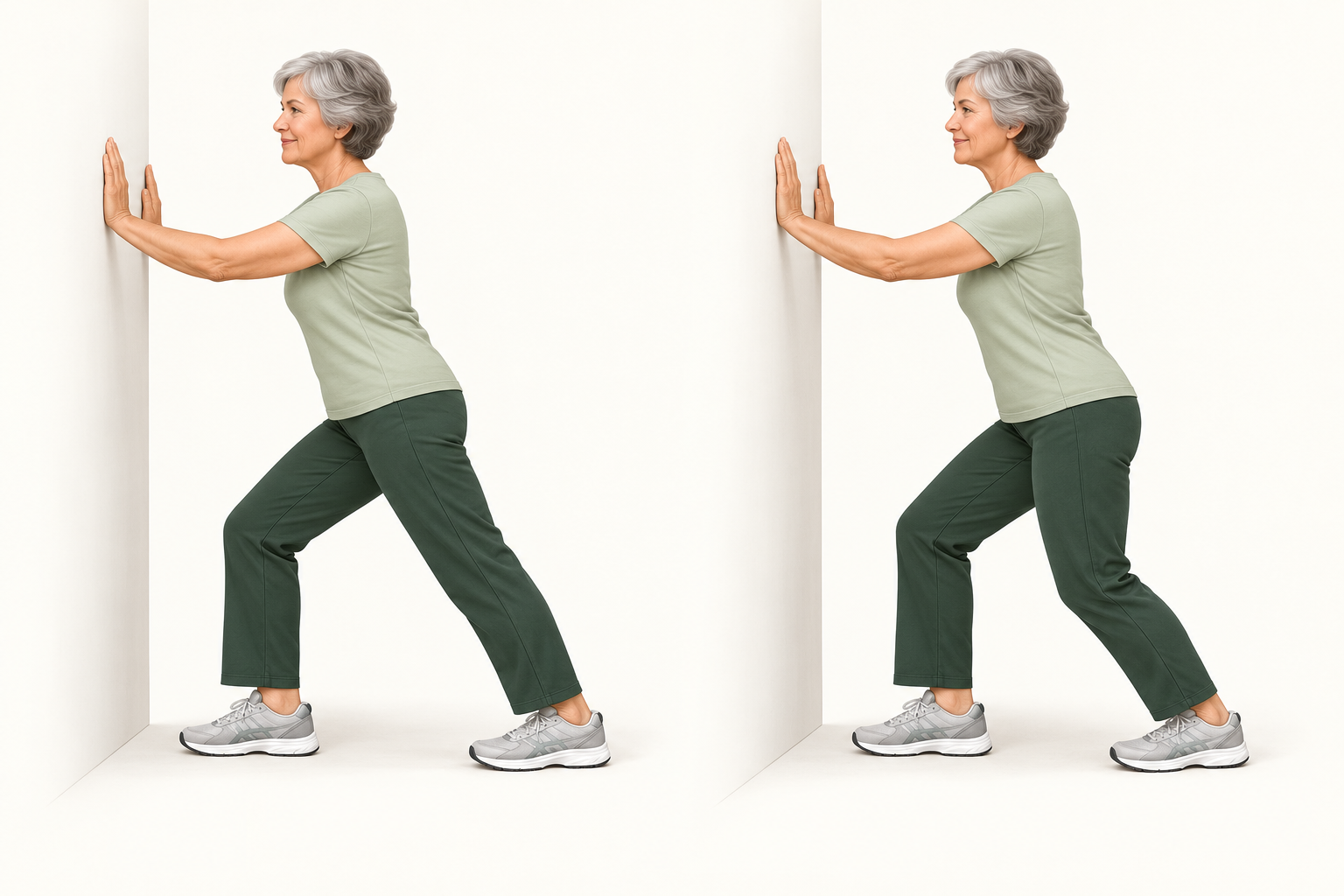
2-3. Straight- and bent-knee calf stretches
With hands on a wall and feet in a staggered stance, keep the rear heel down. Lean forward with the rear knee straight, then try the variation with that knee gently bent. Shorten the stance or ease the stretch if needed.
Build strength gradually
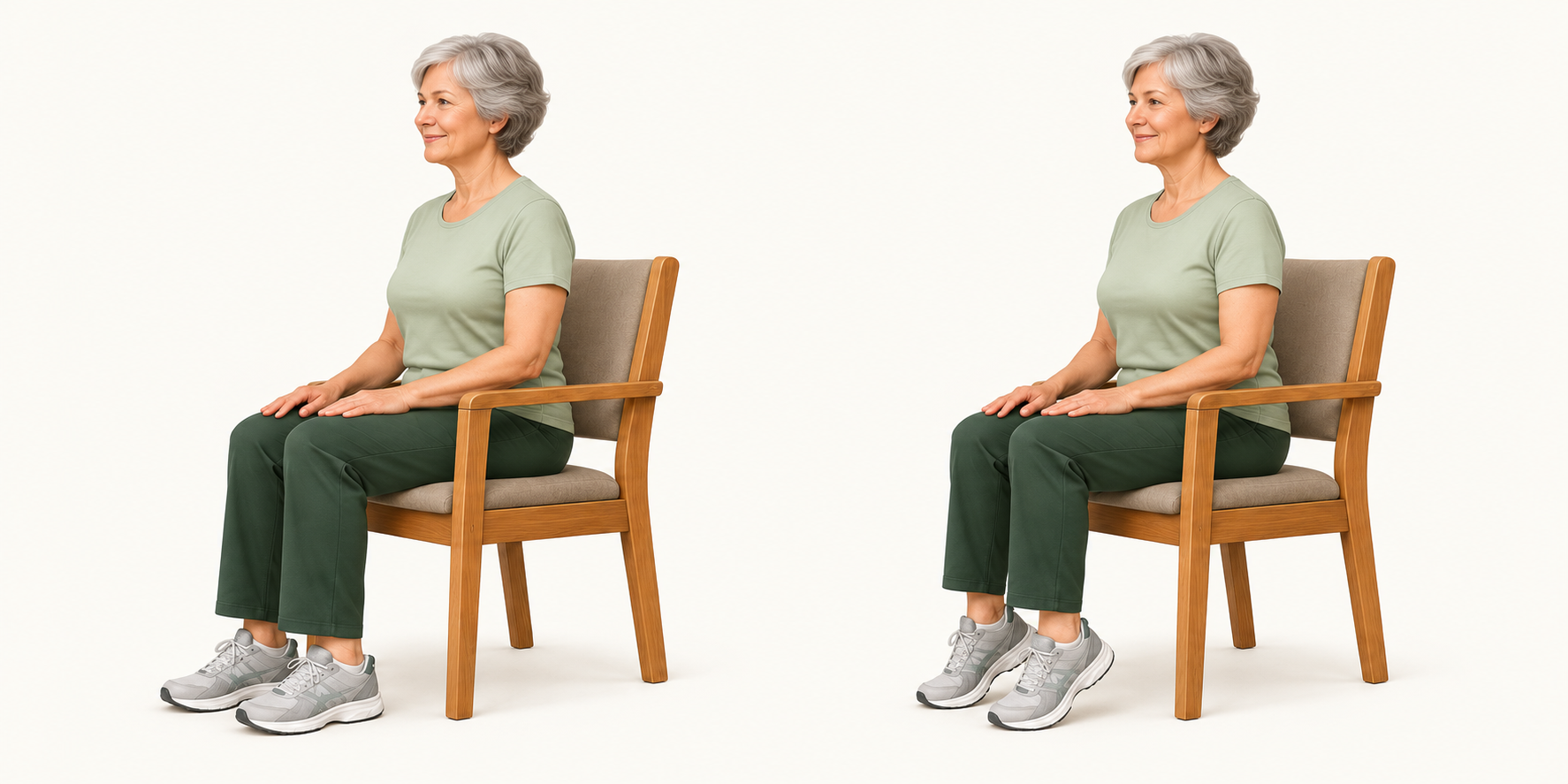
4. Seated heel raise
Start seated if standing is difficult. Keep the balls of your feet on the floor as both heels rise, then lower slowly.
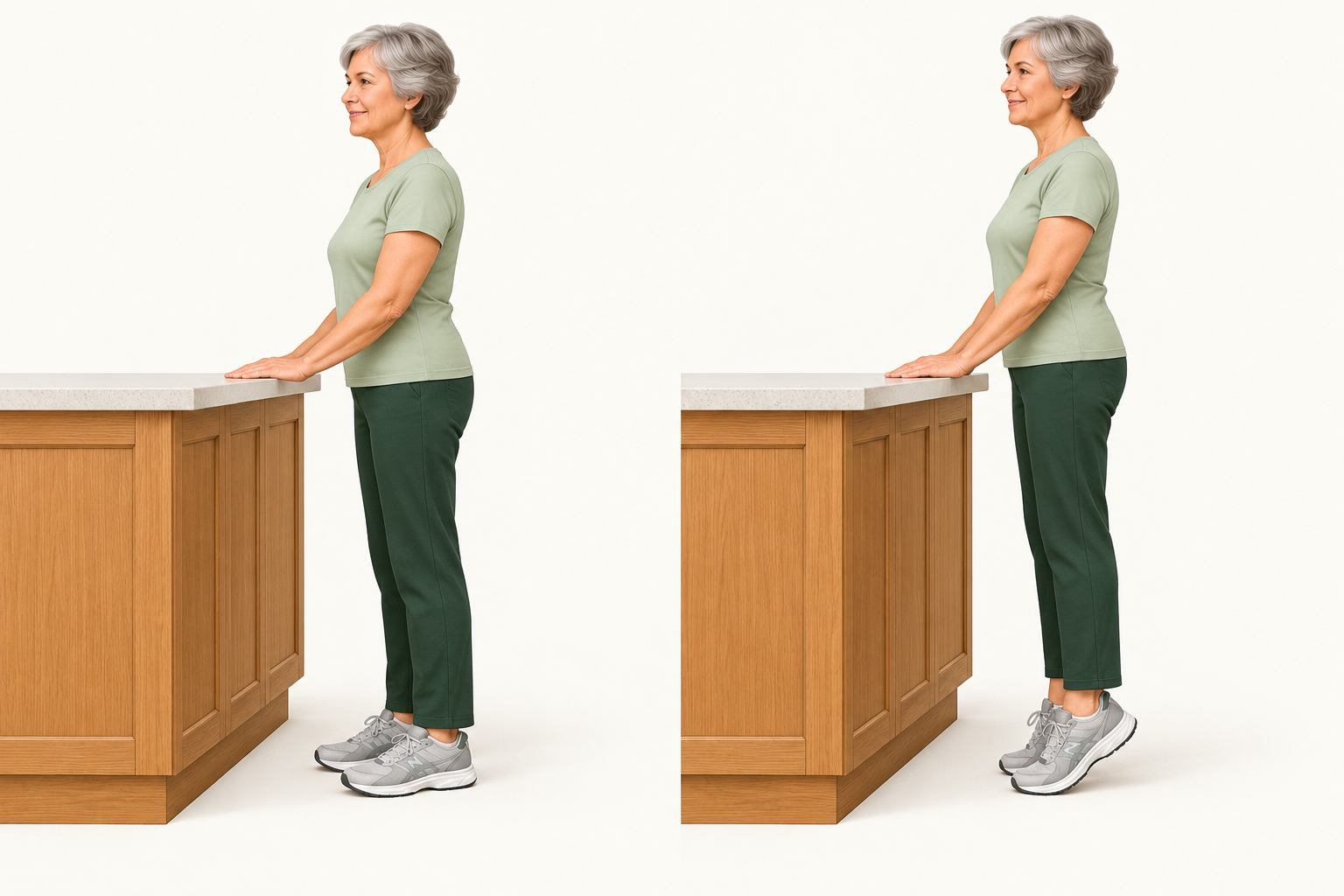
5. Supported standing heel raise
Hold a fixed counter, raise both heels while keeping your toes down, then lower with control. Begin on level ground. Choose the seated or standing version to start, rather than doing both.
The PDF includes example starting amounts and ways to progress. Adapt them with your PT. They are not a single required protocol. DynamicHealth NHS: Exercise and symptom guidance.
Use the next morning as feedback
Mild discomfort can occur, but stop for sharp or escalating pain, limping, or loss of control. If first-step pain is clearly worse the next morning or symptoms remain elevated, reduce the next exercise session or time on your feet. Repeat a tolerable amount for several days before adding more.
What about inserts and night splints?
Footwear or inserts may help alongside active care; a particular brand or expensive custom insert is not automatically necessary. For persistent first-step morning pain, ask whether a night splint fits your situation. It needs an appropriate fit and a trial, rather than an expectation of an overnight cure.
Return to longer walks
Choose a familiar level route and a duration below your flare-up point. Shorter bouts can help you stay active while adjusting the total amount. Build gradually as the response improves; ask for a return-to-running plan if that is your goal. Recovery often takes months, and the pace varies.
When to get checked
Seek urgent care after a sudden injury with a pop, inability to bear weight, or major swelling. Get prompt clinical advice for new numbness, diabetes with new foot pain, or worsening symptoms that limit normal activity. NHS: Heel pain and when to seek help.
Open the illustrated guide and symptom tracker →
By Benjamin Harris, DPT · Reviewed October 26, 2026. General education, not a diagnosis or individual treatment prescription. Follow your treating clinician’s plan.


Leave a Reply