
FROM MY PT SCHOOL NOTES · UNIT 3 · CHAPTER 06
What can spinal orthoses protect—and what are their limits?
Spinal braces may restrict selected motions, support healing or influence alignment, but they do not immobilize every spinal segment or substitute for appropriate medical evaluation.
The key concepts
Describe the region and reason for support
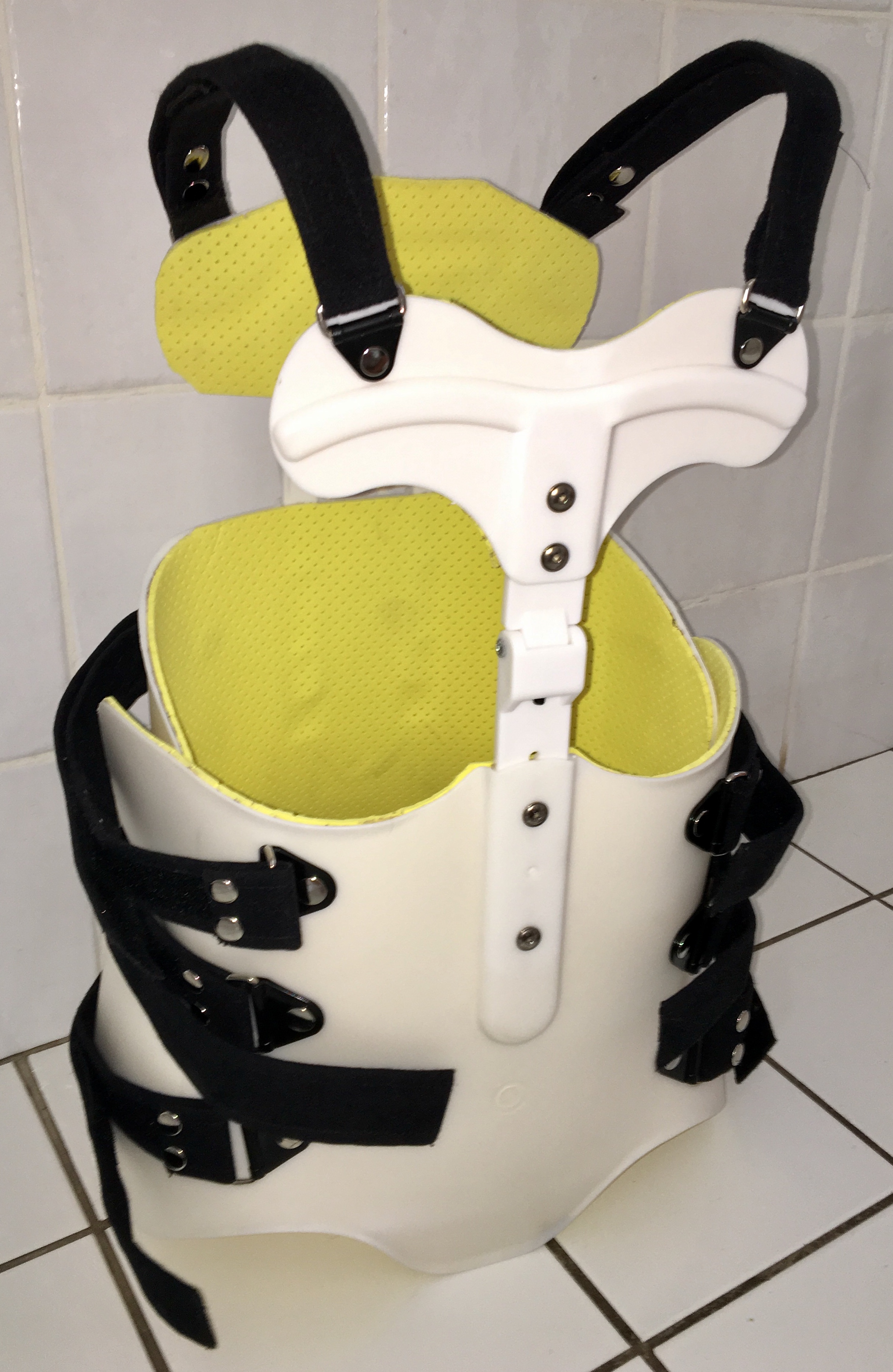
Common terms include cervical orthosis (CO), cervicothoracic orthosis (CTO), lumbosacral orthosis (LSO) and thoracolumbosacral orthosis (TLSO). The correct region depends on the pathology and prescription. The original lecture addresses fractures, postoperative protection, deformity and pain; indications, restrictions and wear schedules vary by injury stability, surgery and clinician orders.
A rigid orthosis may reduce selected motion more than a flexible garment, but its effect varies by design and fit. Skin, breathing, swallowing and ability to function also matter.
Separate evidence by condition
A medically unstable fracture or new neurologic deficit is a medical priority; PT should not independently choose a brace as definitive treatment. In nonspecific low back pain, routine bracing is not an established replacement for active management. In adolescent idiopathic scoliosis, bracing decisions depend on growth, curve magnitude and specialist care, not simply ‘any curved spine needs a TLSO.’ Refer to SOSORT publications for appropriate guidelines.
Discuss the goals honestly: protection, symptom management or growth-related curve management differ from correcting a permanent anatomical problem.
Check function and complications
Review donning/doffing, closure tension, pressure near bony prominences, ability to breathe and tolerate sitting or standing, hygiene, gait, transfers and actual surgical or fracture precautions. In a rigid cervical device, new dysphagia, skin injury or neurologic symptoms warrant communication with the responsible team.
Quick comparison
| CO / CTO | Different amounts of cervical and cervicothoracic support |
| LSO | Lumbosacral region; selected motion and support goals |
| TLSO | Thoracolumbar region; fracture/surgery/deformity contexts |
| Scoliosis brace | Specialist-managed growth and curve progression context |
Clinical reasoning
A patient asks to use a rigid lumbar brace indefinitely for chronic nonspecific back pain because ‘braces strengthen the spine.’ How do you respond?
Reasoning: Explain that comfort and temporary support are different from strengthening. Assess disability and activity goals; use evidence-based active care and medical directions rather than assuming long-term rigid bracing is necessary.
Check your understanding
Why are spinal diagnosis, neurologic status and medical orders essential before recommending an orthosis?
Source lecture(s): 6 Spinal Orthoses.pdf. Evidence update: Scoliosis and fracture management should follow condition-specific contemporary specialist guidance; the 2019 lecture includes historical assumptions.
These are focused lessons drawn from my PT-school notes, with later guidance identified separately. They are not official coursework, device prescriptions or patient-specific treatment protocols.


