
FROM MY PT SCHOOL NOTES · MOTOR CONTROL · CHAPTER 11
How can one gait deviation have several causes?
The big idea
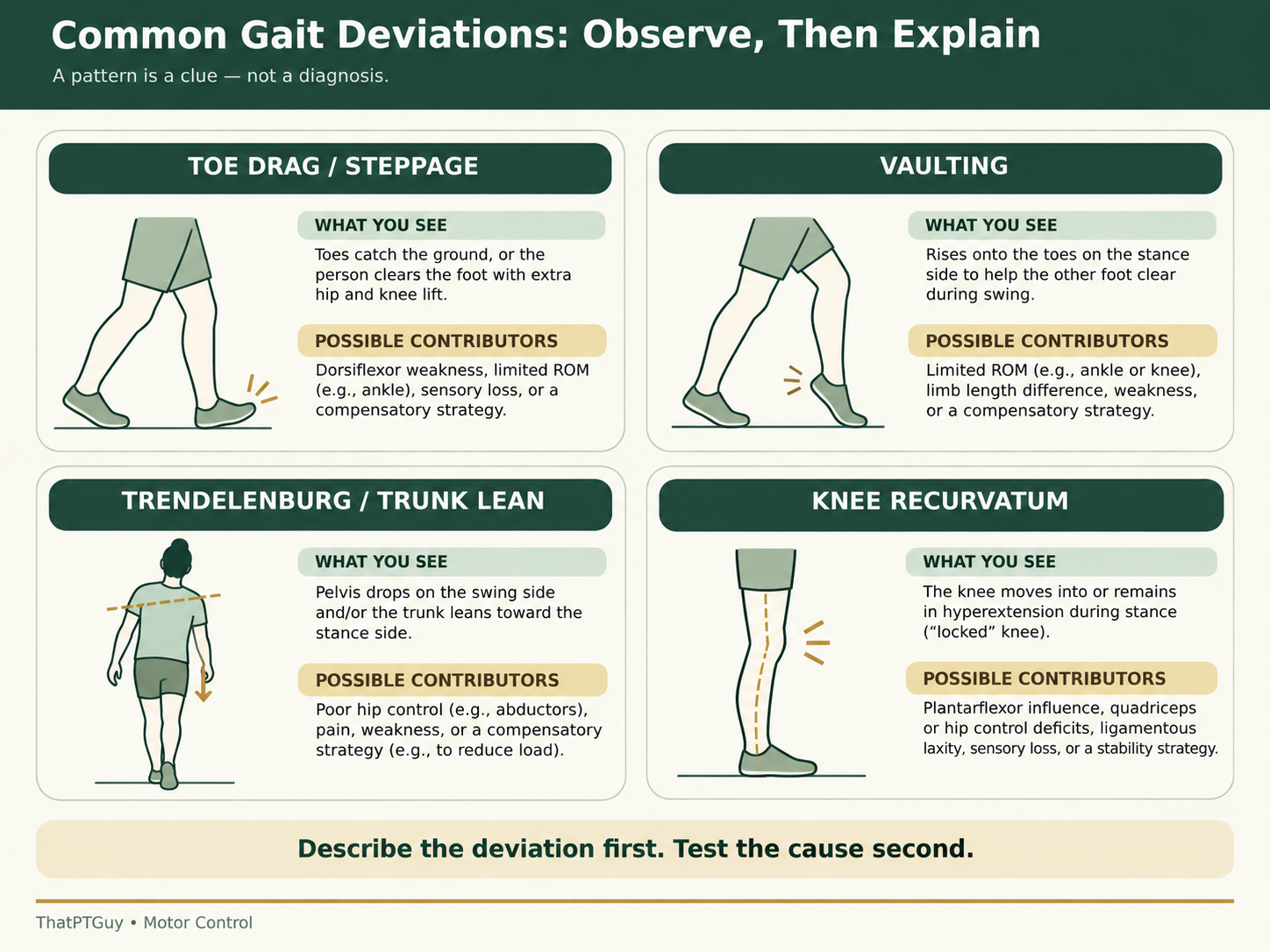
Gait patterns are descriptions, not diagnoses. A toe-first contact may reflect plantarflexor tightness, reduced dorsiflexor control, pain, learned habit or a deliberate adaptation. A trunk lean may reduce hip abductor demand, improve perceived stability, respond to pain or compensate for asymmetrical support. Knee recurvatum can occur through different combinations of plantarflexor action, quadriceps control, proprioception, joint alignment and strategy.
Observe → Hypothesize → Test
First describe the phase and plane where the deviation occurs. Identify the functional effect: poor clearance, reduced stability, loss of progression, extra effort, pain, or difficulty adapting. Then test plausible mobility, strength, motor control, sensation, pain, orthotic, assistive device and environmental contributors. Look for linked deviations and asymmetries rather than assigning a single cause to one feature.
Familiar Patterns
Steppage gait can compensate for inadequate swing-foot clearance, often involving foot drop; vaulting raises the contralateral body to make room for a long or poorly flexing swing limb; Trendelenburg is a contralateral pelvic drop during stance and can differ from ipsilateral trunk lean; crouch patterns involve sustained flexion; festination can appear in Parkinsonian gait; antalgic patterns redistribute loading because of pain. Real people may demonstrate combinations.
Clinical Connection
Treat the important limiting factor AND practice the goal. An ankle dorsiflexion deficit should not be addressed with isolated strength work alone if the patient cannot negotiate home thresholds.
Pause and apply it
What are three plausible causes of a knee snapping backward in stance?
Try identifying the task goal, the movement strategy, and what you would measure before choosing an intervention.
A common point of confusion
Do not rely on unlicensed example videos as product assets. When teaching patterns, use original vector or properly rights-cleared examples.
Source notes and learning scope
Based on my original class notes: Specific Abnormal Gait Patterns; Abnormal Mobility Parts 1–2; Clinical Management of Mobility. This independently reorganized learning chapter is not a textbook reproduction, individualized treatment instruction, or NPTE guarantee. Compare it with your own coursework and current evidence.

