
FROM MY PT SCHOOL NOTES · MUSCULOSKELETAL · CHAPTER 01
Start with the task, not the special test
A successful MSK evaluation identifies what matters to the person, screens for important risks, and then uses targeted examination to test competing explanations.
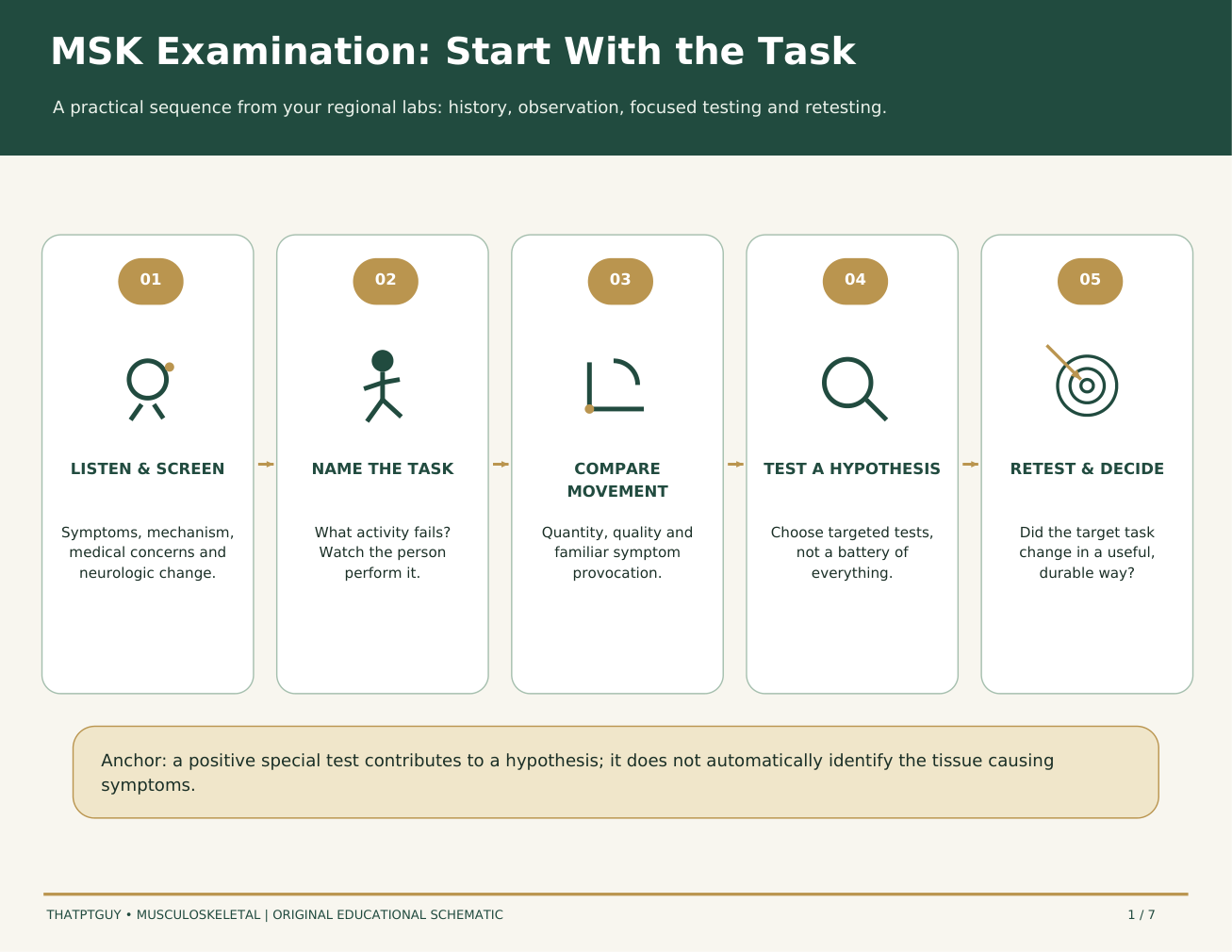
What the history tells you
Your regional labs emphasize prior level of function, mechanism or recent loading changes, where and when symptoms occur, what makes them better or worse, and which activities have become difficult. Safety concerns, major trauma, systemic symptoms, and progressive neurologic changes may change the normal examination sequence.
Watch the task, then compare movement
Observe the activity the patient wants to improve. Your class notes repeatedly use three lenses: quantity (how far), quality (how well), and provocation (whether it reproduces the familiar symptoms). Then compare appropriate AROM, PROM, resisted movement and adjacent-region or neurologic findings.
Choose tests that answer a specific question
A positive provocative test can strengthen or weaken a hypothesis, but it does not automatically identify a single injured structure. Use only the tests relevant to history, differential considerations and meaningful function; retest the same task later to learn whether the intervention helped.
Try a quick decision
A patient has shoulder pain, but turning the neck reproduces familiar hand tingling. What do you examine next?
Broaden the assessment: relevant cervical movement, strength, sensation or reflexes as indicated, shoulder testing, and the target reach/typing task. Do not assume the shoulder is the only source or diagnose a nerve-root condition from one movement.
Original materials
Knee Evaluation; Shoulder Complex Lab; Hip Complex Lab; Ankle and Foot Complex Lab.
Where this came from
This lesson reorganizes themes from my own PT-school lecture/lab materials and identifies outside guidance separately. It is a personal study companion, not an official course, diagnostic protocol, or NPTE-pass promise. Compare details with your own materials and current practice guidance.

