
FROM MY PT SCHOOL NOTES · UNIT 2 · CHAPTER 04
How do AFO choices affect both foot clearance and the knee?
An ankle-foot orthosis can assist swing clearance, change stance loading and influence knee movement. Device stiffness and alignment matter as much as the label ‘AFO.’
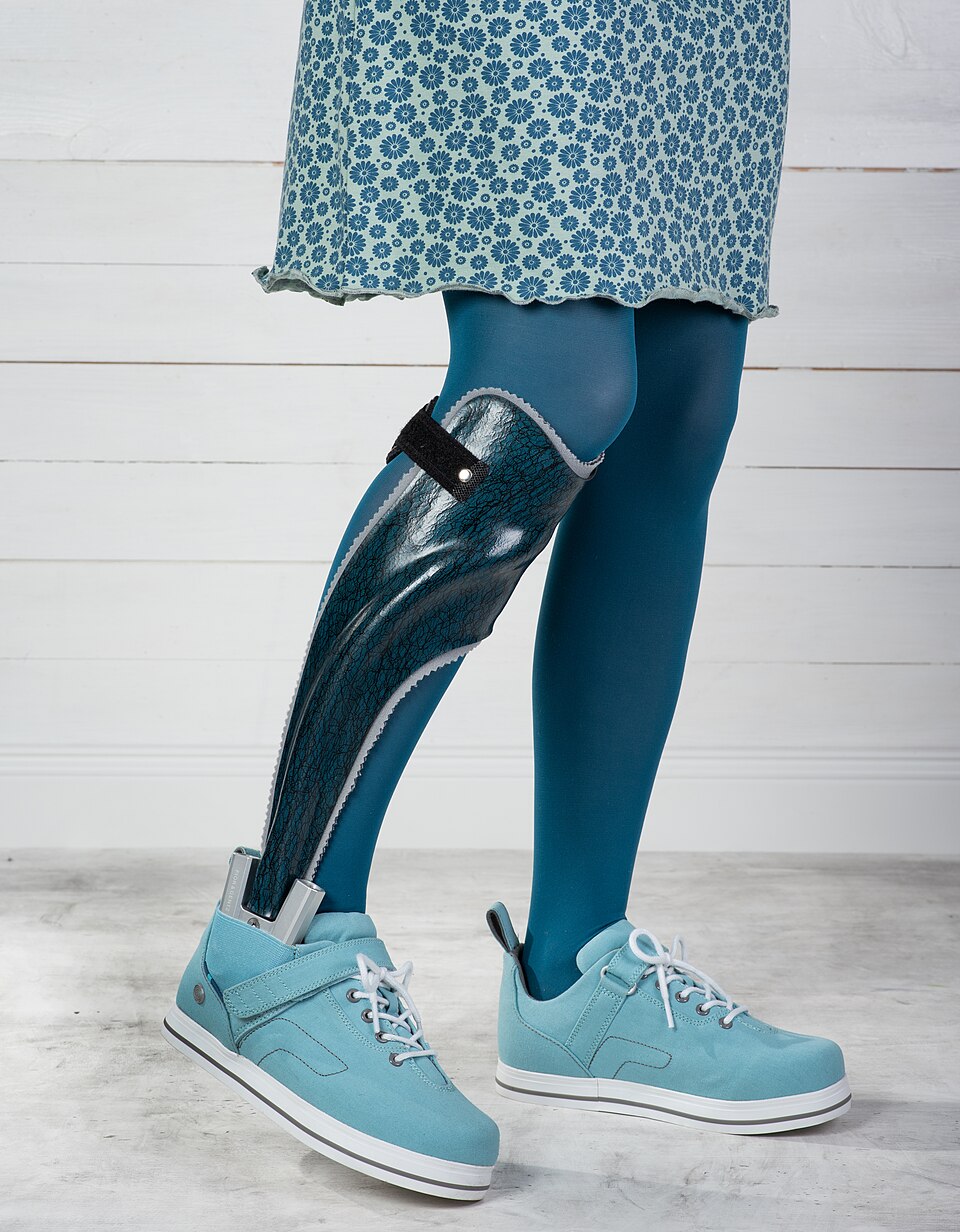
The key concepts
First describe the gait problem
Assess dorsiflexion during swing, foot placement at initial contact, tibial progression in stance, knee flexion or hyperextension, proximal control, spasticity, sensory loss and fall risk. Foot clearance problems do not always originate only in ankle dorsiflexor weakness, and a knee problem may be amplified by an ankle or footwear constraint.
The original lecture groups AFOs by function and construction. Common options include flexible/posterior-leaf-spring designs, solid AFOs, articulated designs with mechanical stops, and stiffer anterior or ground-reaction designs. Each can have trade-offs affecting stance support and motion.
Compare what changes with different stiffness
A more flexible design may aid clearance while preserving some ankle progression; a rigid or tuned system may provide greater control but can restrict movement needed elsewhere. A ground-reaction-oriented design may alter knee extension moment in stance, depending on alignment, shoe, limb posture and walking pattern. It is not universally correct for every weak quadriceps presentation.
AFO-footwear combination tuning, joint stops, material properties, heel geometry and brace fit alter real effects. Ask an orthotist to review when knee buckling, hyperextension or poor roll-over persists.
Reassess rather than locking in one device
The 2021 ANPT guideline supports AFO and functional electrical stimulation (FES) for selected post-stroke mobility goals; it does not establish one universally superior AFO design. Train with the device, document gait speed/balance or the targeted mobility task, check skin and comfort, and reevaluate as recovery or context changes.
See the three AFO designs side by side
These are simplified design illustrations, not instructions for selecting or fabricating a brace. Observe the shape and ankle section first, then compare each option with the gait goals below.
Solid AFO
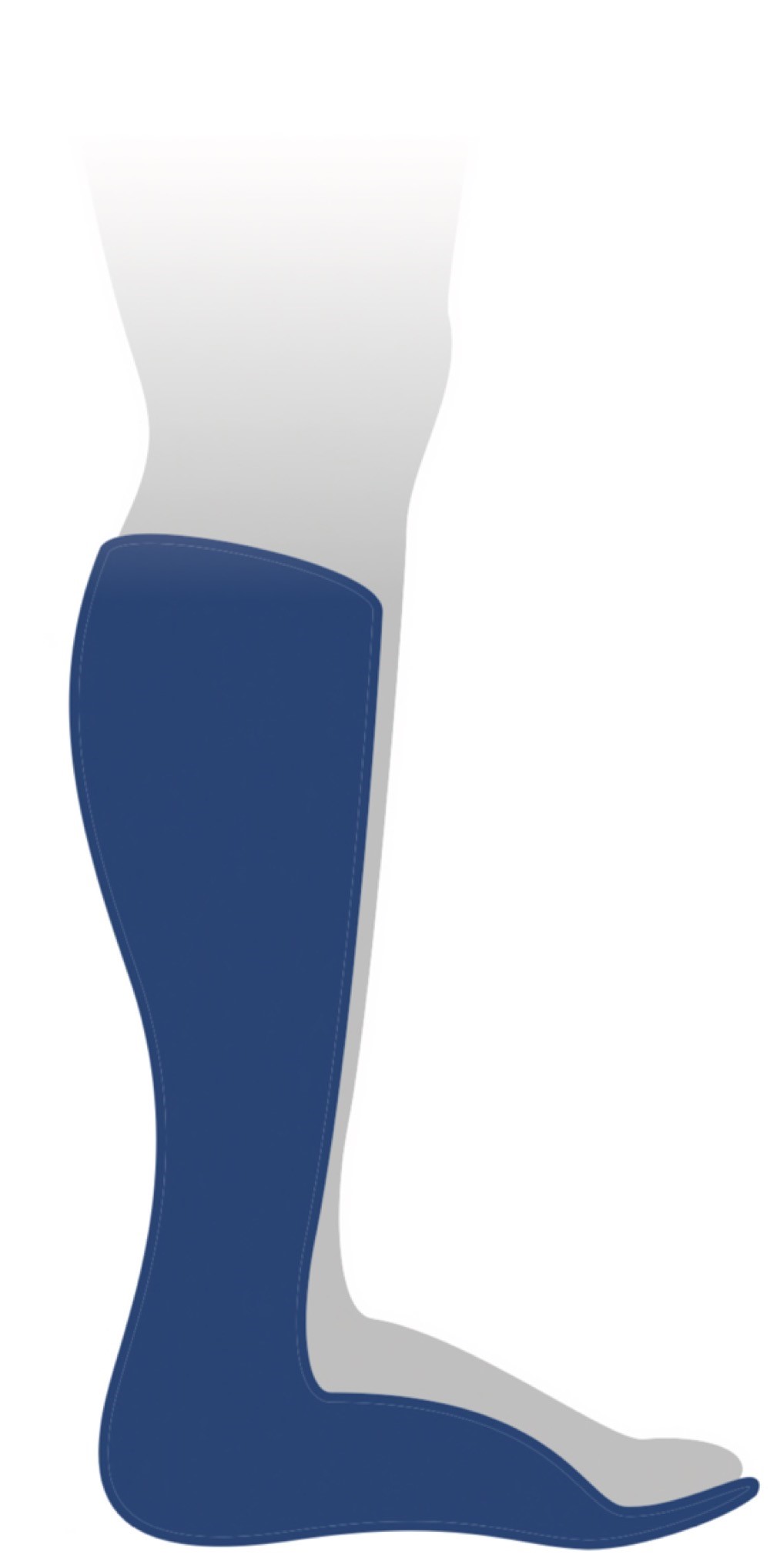
Continuous shell: typically offers greater restriction of ankle motion; alignment and footwear influence knee mechanics.
Hinged AFO
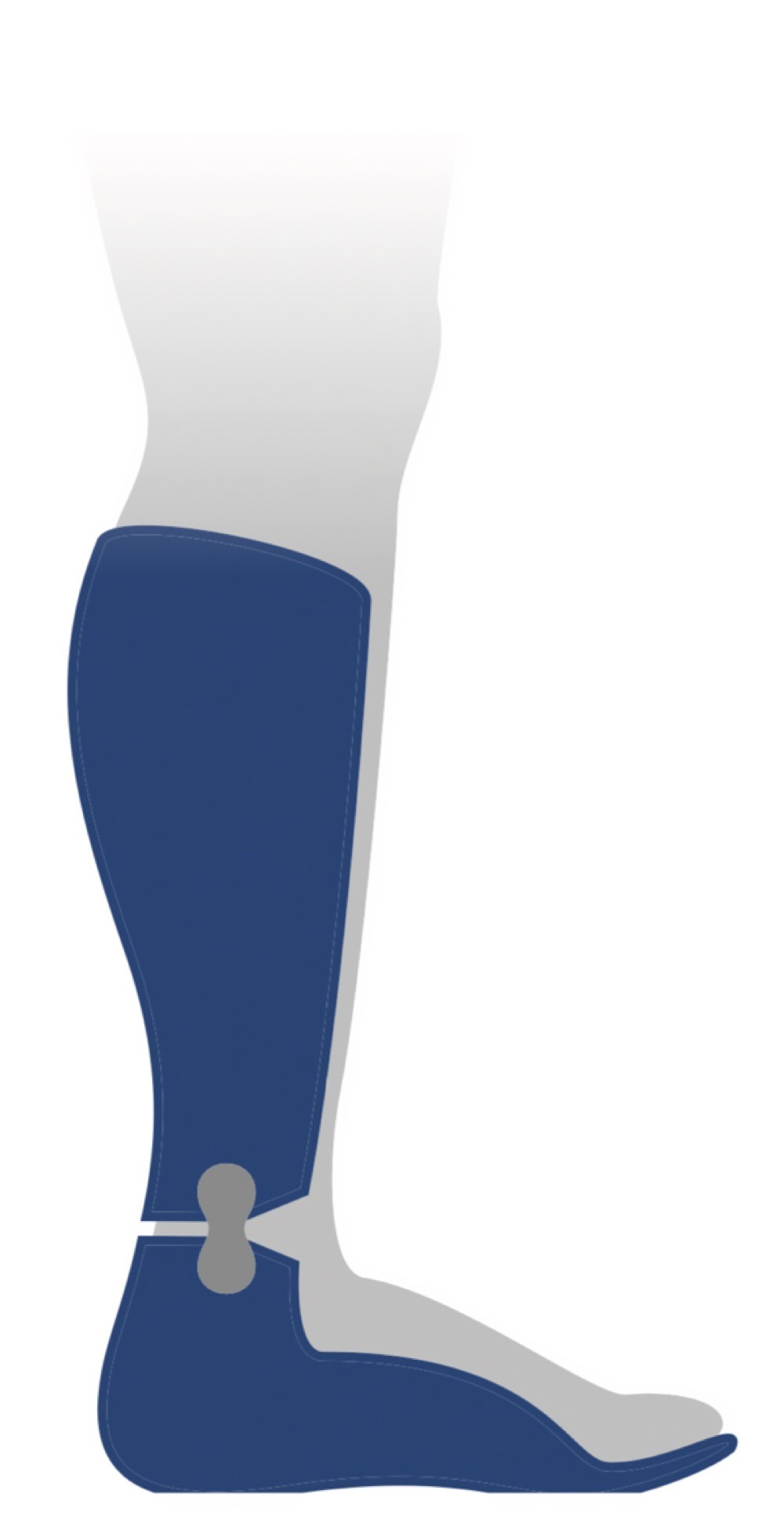
Articulated joint: permits selected ankle motion depending on stops, controls and patient stability.
Posterior leaf spring
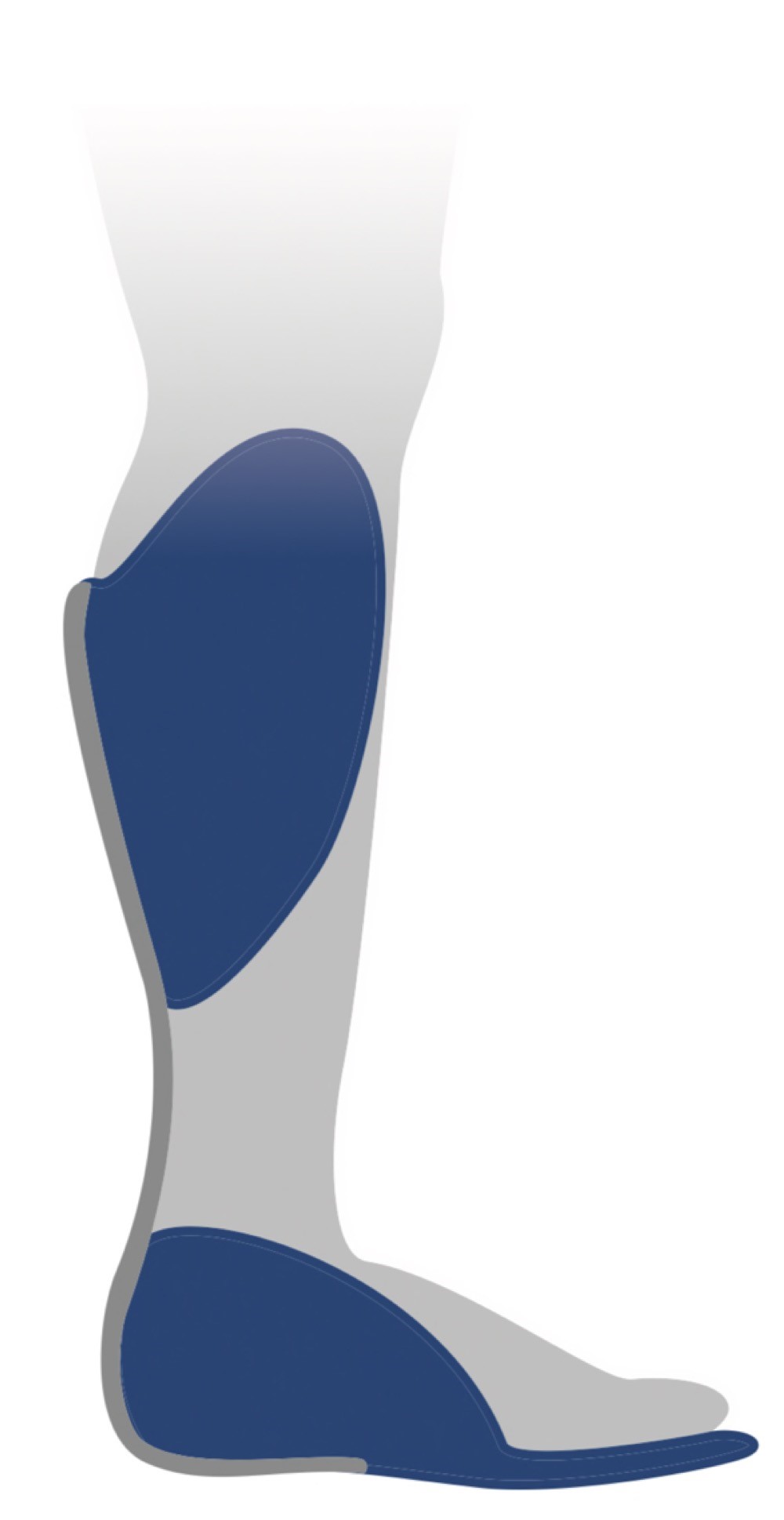
More flexible posterior strut: may assist swing clearance with less ankle restraint; not adequate for every stance-control need.
Clinical reminder: AFO stiffness and knee position interact. Reassess toe clearance, tibial progression, stance-knee control, comfort and skin with the actual AFO-footwear combination.
Quick comparison
| Flexible AFO | May aid swing clearance while permitting some movement |
| Solid AFO | More ankle control; can alter tibial progression and knee demand |
| Articulated AFO | Allows selected motion subject to stops and stability needs |
| Ground-reaction design | Can influence knee extension moments; alignment-sensitive |
Clinical reasoning
A patient receives a stiff AFO that clears the toes but now shows more knee hyperextension and difficulty descending a ramp. Has the device necessarily succeeded?
Reasoning: No. The target was only partly achieved. Reevaluate AFO-footwear alignment, tibial progression, knee control, safety and alternative designs.
Check your understanding
Why should knee position be reassessed after changing ankle stiffness?
Source lecture(s): 4 Principles of LE Orthoses .pdf; 5 Principles of LE Orthoses Part 2.pdf. Evidence update: AFO versus FES evidence updated from the 2021 ANPT guideline; proprietary manufacturers’ diagrams are not reproduced.
These are focused lessons drawn from my PT-school notes, with later guidance identified separately. They are not official coursework, device prescriptions or patient-specific treatment protocols.


