
CHAPTER 6 · FROM MY PT NOTES
Balance training needs more than a foam pad
Standing on something wobbly makes an exercise harder. The better question is whether that challenge helps with the situation where this person loses balance.
1. What kind of balance problem?
Vision, somatosensation and the vestibular system contribute information about position and movement. Strength, available motion, attention and the task also matter. One failed balance task does not isolate one system.
Anticipatory control prepares for an expected movement, such as reaching. Reactive control responds to an unexpected disturbance. Stepping may be a useful balance response—not a failed attempt to keep the feet still.
Ask about falls, near falls, dizziness, medication changes, footwear and the home setting. Falls are multifactorial; an exercise program does not replace addressing other relevant risks.
2. Pick the measure that answers your question
Berg, Tinetti and SPPB cover other combinations of tasks. Choose the measure using the setting, population and question.
Use the official instructions and population-appropriate interpretation. If you change a standardized test, record the modification and avoid treating the score as directly comparable with its original norms. No single cutoff guarantees that someone will or won’t fall.
3. Practice the situation safely
If turning to sit is the problem, practice approaching the chair, turning and sitting with appropriate guarding and equipment. Progress toward the actual route, turns and distractions only when safe and relevant.
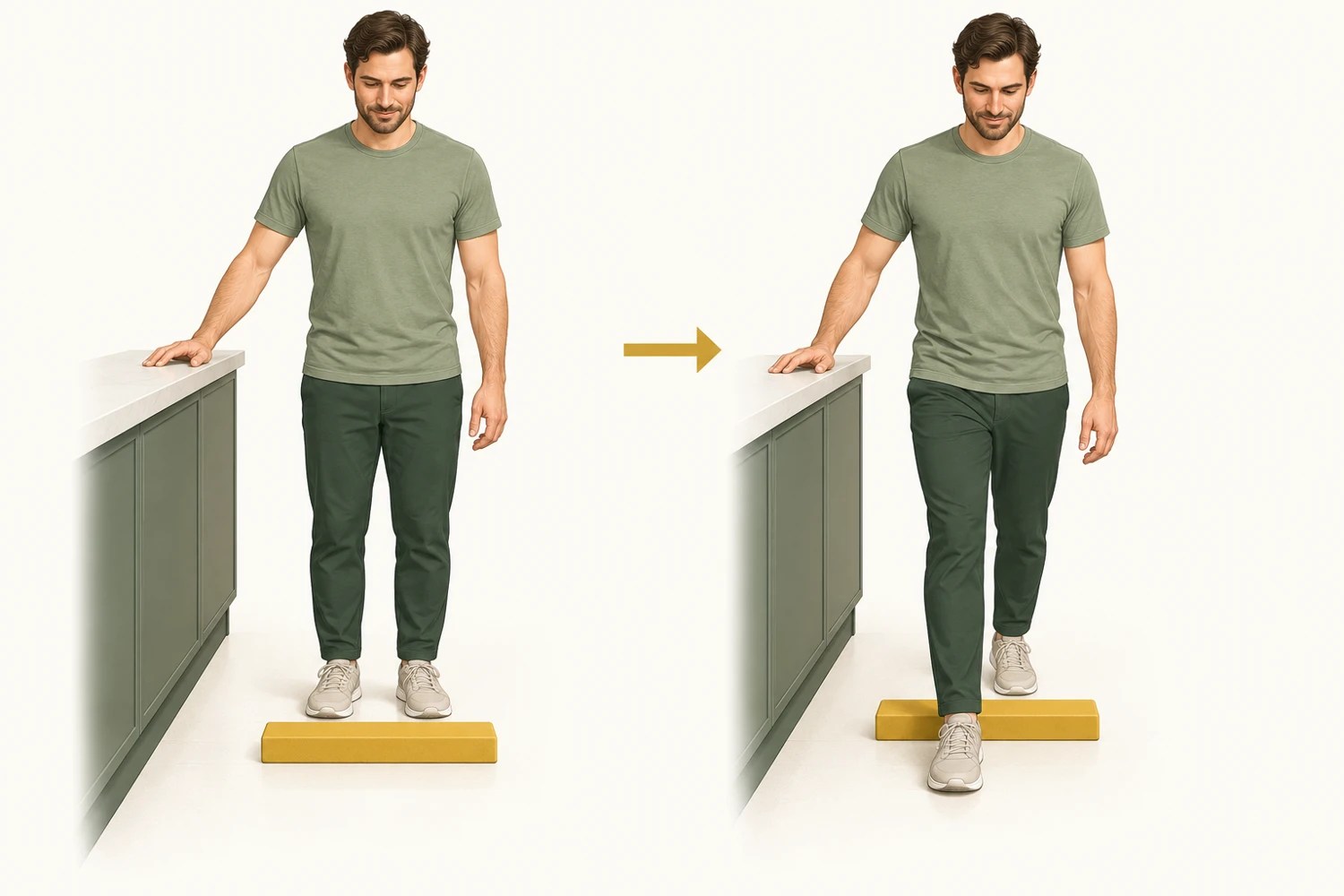
For stepping over an obstacle, begin with a manageable obstacle and needed support, then work toward the required height and sequence. You might change reach distance, step direction, support or task complexity. There is no need to add all of them.
Eyes-closed tasks, unstable surfaces, dual tasks and perturbations can increase risk. They require selection, supervision and protection appropriate to the person. Don’t prescribe an unsafe home challenge to make it look advanced.
Before you move on
A patient loses balance when turning. Is longer single-leg standing automatically the best treatment?
No. Assess turning and its contributors. An isolated balance exercise may help, but the program should also address the task where difficulty occurs.
The patient uses a rail successfully. Must it be removed to show progress?
No. Appropriate support can improve safety and participation. Progress can mean better task performance with the support they will continue to use.
Practice this chapter · 2 questions
Sources & learning scope
Based on these uploaded class references: 3 Therapeutic Exercise Balance Testing and Training; STEADI Algorithm; assessment handouts. Original explanations and examples; class slides and licensed assessment forms are not reproduced. Current reference links: CDC STEADI: clinical resources and official tests. This is a concise student overview, not a complete treatment protocol. Apply skills within supervision, assessment findings and current precautions. Reviewed October 29, 2026.

