
CHAPTER 7 · FROM MY PT NOTES
Treat the person, not the birthday
Two people can be the same age and need very different programs. I’d start with what they can do, what has become difficult, and what they want to keep doing.
1. Find the demands behind independence
Basic activities of daily living include tasks such as bathing, dressing and transfers. Instrumental activities include things such as shopping, meal preparation and managing medications. Ask which specific part is difficult rather than assuming age explains it.
Look across strength, power, endurance, balance and mobility. Several modest limitations can add up. Also consider vision, hearing, cognition, pain, nutrition, medications, fatigue and available support. Coordinate concerns that need another professional.
2. Choose a useful starting point
For carrying groceries, practice a manageable object and short carry with the person’s needed device or support. Work toward the required distance and conditions. Check whether the person can manage the door, turn and put the item down.
Older age does not automatically mean tiny weights forever. Select challenge from assessment, precautions, performance and recovery. Likewise, moving faster is not appropriate for everyone; power-focused practice needs suitable selection and supervision.
3. Use measures without turning them into labels
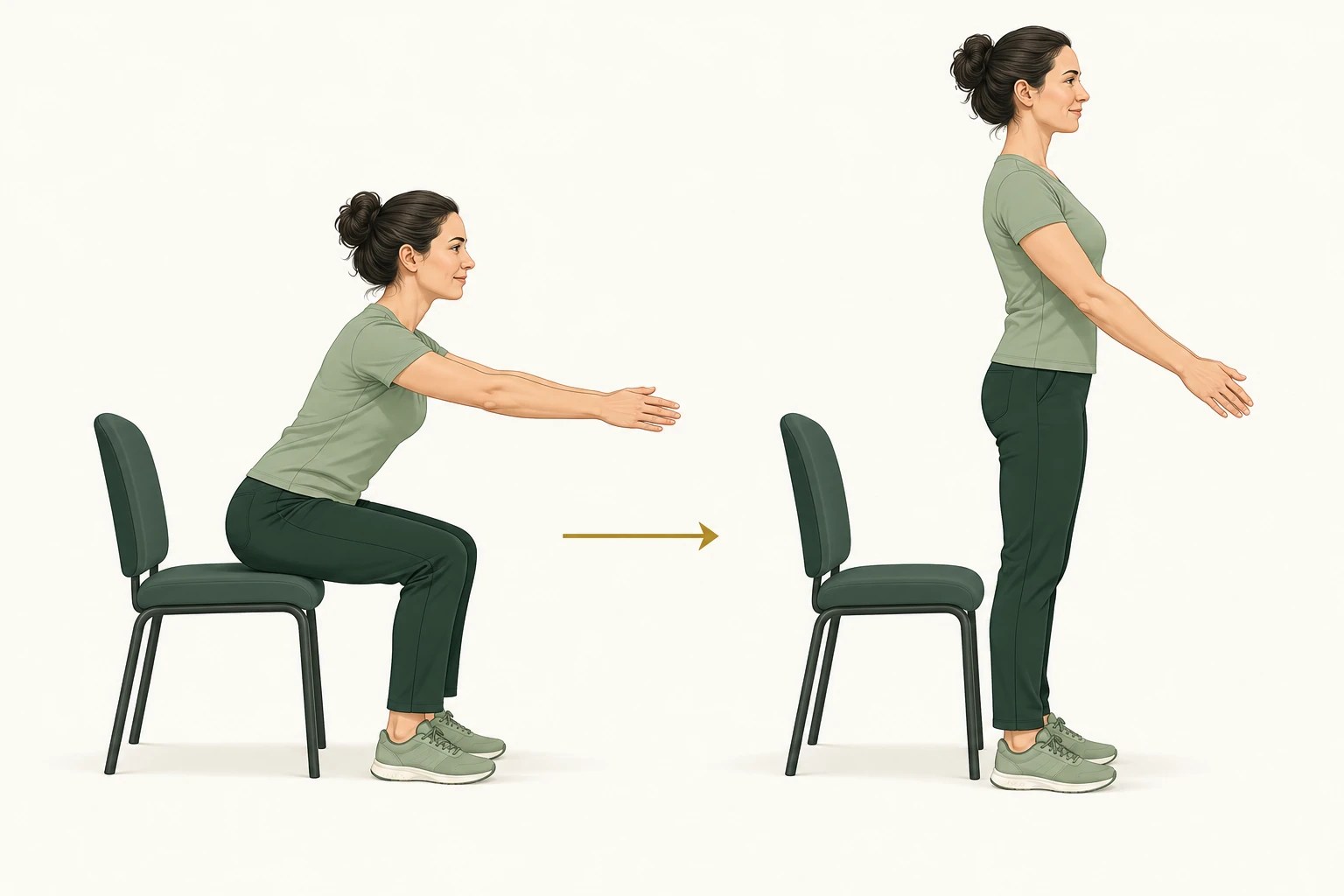
Gait speed, chair-stand measures, TUG and SPPB can help describe physical performance. Katz and Lawton measures address everyday function. Use the version and instructions you intend, and interpret results in context.
Frailty describes vulnerability and reduced reserve; it is not simply a synonym for age or weakness. Sarcopenia concerns muscle health and requires appropriate diagnostic criteria. One slow walk does not establish either diagnosis.
Make instructions easy to follow, demonstrate, allow practice and ask the person to show you the plan. Involve a caregiver with consent when useful. A sudden change in function or cognition needs assessment, not an assumption that they are just getting older.
Before you move on
An 80-year-old finishes the exercise easily. Keep it light solely because of age?
No. Assess whether a greater appropriate challenge serves the goal and can be performed and recovered from safely.
The clinic transfer improves. What else should you ask?
Whether it works at home: seat height, rail placement, fatigue, repeated attempts and the help actually available can change the demand.
Practice this chapter · 2 questions
Sources & learning scope
Based on these uploaded class references: 2 Exercise for Older Adults; Katz ADL; Lawton IADL; Short Physical Performance Battery. Original explanations and examples; class slides and licensed assessment forms are not reproduced. Current reference links: NIA: exercise and physical ability · CDC STEADI clinical resources. This is a concise student overview, not a complete treatment protocol. Apply skills within supervision, assessment findings and current precautions. Reviewed October 29, 2026.

