
CHAPTER 8 · FROM MY PT NOTES
Arthritis changes the plan. It doesn’t write it.
“They have arthritis” doesn’t tell me which exercise to pick. I still need to know what kind, which joints, how active the symptoms are, and what the patient is trying to do.
1. OA and RA aren’t interchangeable
Osteoarthritis affects the whole joint and can involve pain, stiffness and functional difficulty. Exercise tailored to the person—including local strengthening and aerobic fitness—is a core management option. Avoid explaining the joint as simply worn out.
Rheumatoid arthritis is an inflammatory autoimmune disease. Disease activity, joint damage, systemic symptoms and medical management affect exercise planning. Consistent exercise is recommended, but it complements disease-modifying care; it does not replace it.
2. Keep an activity the person can use
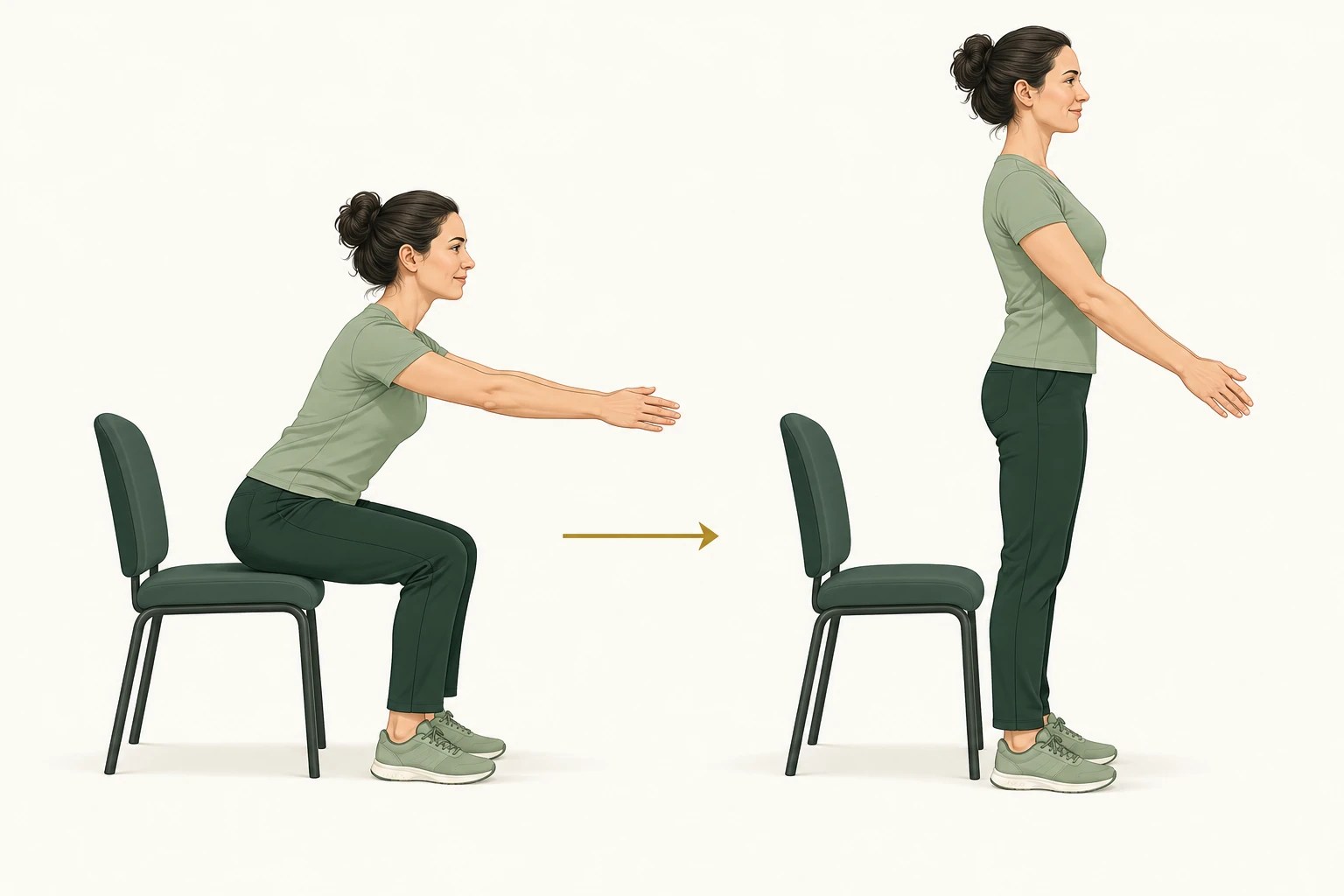
For knee OA and difficult chair rising, try a suitable seat height and support, with strengthening chosen from the assessment. Add walking or another aerobic mode the person can manage. Work toward the actual chair, route or stairs.
During increased symptoms, consider adjusting load, range, amount or recovery instead of automatically stopping all activity. Check for increased swelling, warmth, fatigue and loss of function. A new hot, markedly swollen joint, fever or sudden major change needs prompt medical assessment.
In RA, protect affected joints and coordinate significant flares with the treating team. Avoid forceful loading or stretching through an actively inflamed joint. The rest of the program may still have useful options when appropriate.
3. Explain what the response means
Some discomfort when beginning OA exercise can occur, and ongoing exercise can improve pain and function. That does not mean every painful response should be ignored. Agree on an individual monitoring plan and review symptoms during activity, afterward and with usual function.
Pool exercise may be an option if land exercise is difficult and the person is medically suitable for immersion. A bike may help aerobic work, but if walking is the goal, return to walking practice as ability allows.
Measure something meaningful: assistance to rise, walking tolerance or ability to prepare a meal. The plan should help the person live better—not just complete more knee extensions.
Before you move on
An OA exercise causes some discomfort. Does that prove joint damage?
No. Interpret the response alongside the examination, symptom course and function. Modify or reassess when the response is disproportionate, worsening or accompanied by concerning findings.
Can exercise replace RA medication?
No. Exercise supports function and health alongside appropriate medical management. Disease activity and treatment decisions require the treating team.
Practice this chapter · 2 questions
Sources & learning scope
Based on these uploaded class references: 5 Exercise for OA and RA; 2 Assessment and Prescription. Original explanations and examples; class slides and licensed assessment forms are not reproduced. Current reference links: NICE NG226: osteoarthritis recommendations · ACR: exercise and rehabilitation for RA. This is a concise student overview, not a complete treatment protocol. Apply skills within supervision, assessment findings and current precautions. Reviewed October 29, 2026.

