
LESSON 1 · ABOUT 2 MINUTES
How do I know which exercise to choose?
Start with the task the patient wants to do. Choose an exercise that addresses a relevant limitation, practices that task, or both.
Goal → relevant finding → exercise → recheck the goal.
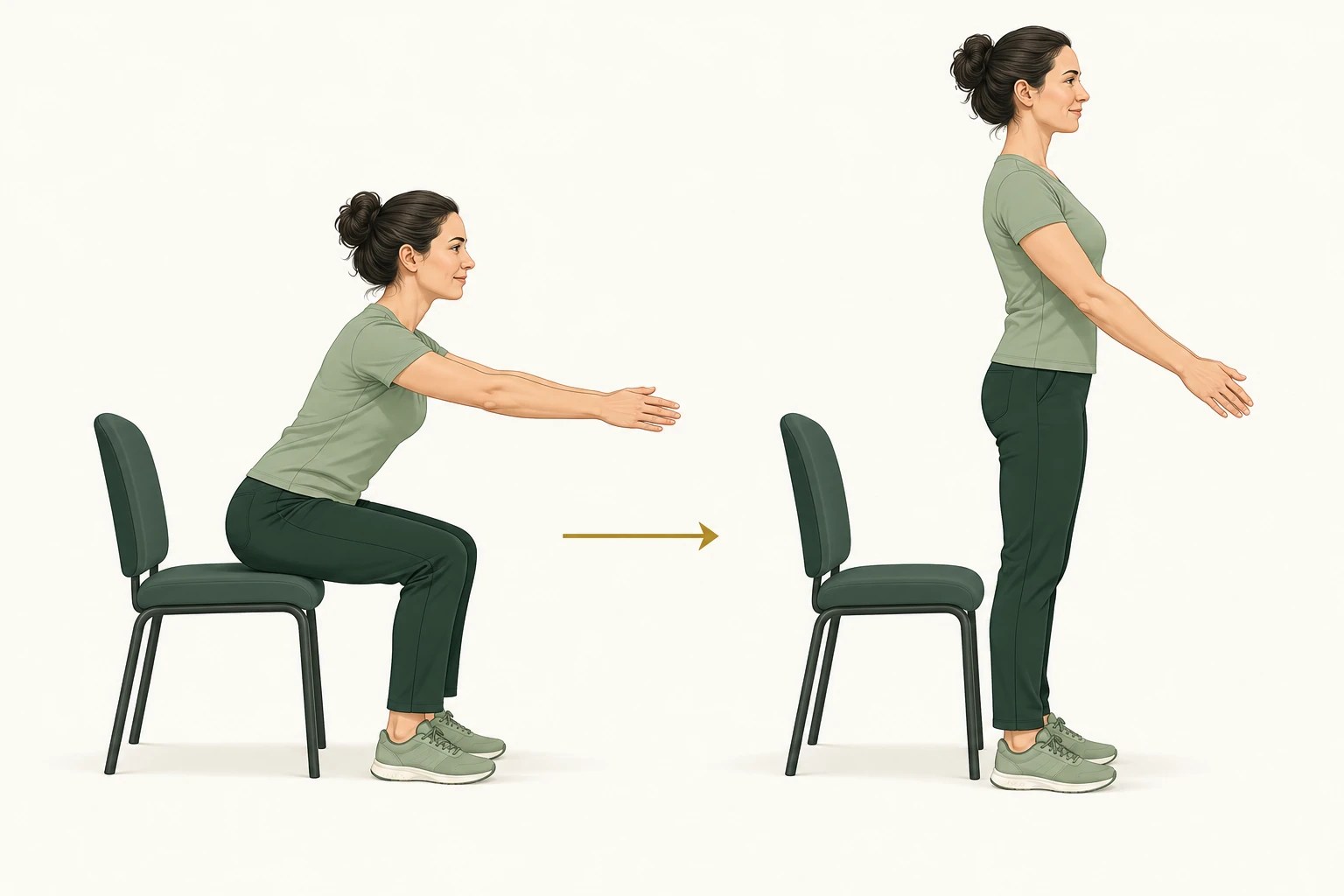
Example: stand up from a chair without using the arms
Build the capacity: seated knee extension
Choose it when: testing supports reduced quadriceps force as a contributor to difficulty standing. The patient straightens the knee against resistance matched to their ability.
Why: focused loading can build knee-extensor capacity. It does not replace practicing chair rising.
Practice the task: sit-to-stand
Choose it when: the patient can safely practice rising but needs help coordinating the movement or managing the demand. Start with a higher stable chair or arm support if needed.
Why: it practices the exact activity. As appropriate, change one demand—such as seat height or support—and monitor the response.
Check whether it helped
Recheck chair rising using the same seat height and arm support. Track assistance, effort, symptoms and confidence. Also reassess the capacity you targeted. Stronger knee extension is useful; easier chair rising shows transfer toward this goal.
Quick contrast: a supported heel raise may fit reduced push-off capacity during walking. It is not automatically relevant to chair rising just because it is a leg exercise.
Your one-sentence test
“I chose ___ to address ___ so the patient can ___.”
Examples assume assessment supports the choice and current precautions allow it. Dose and progression depend on ability, response and recovery.
Sources & learning scope
Original synthesis informed by my class materials: 2 Assessment and Prescription (assessment, specificity, prescription and adherence) and 3 Functioning and Disability (function, context and patient management). Course slides and figures are not reproduced.
WHO: ICF framework · APTA: linking interventions, response and functional progress. AAOS: knee conditioning exercise reference (knee-extension example; dosage is individualized here). The five-step diagram is a teaching synthesis, not a validated clinical decision rule.
Published October 29, 2026. Student education, not an individualized treatment plan. Apply clinical skills within supervision, current precautions and the established plan of care.

