
CASE 4 · BALANCE · TASK-SPECIFIC PRACTICE
Walking is fine. Turning isn’t.
Ruth, 76, wants to walk from the kitchen to her patio without catching the doorway or losing balance. Straight-line walking looks steady, but she reports two near falls while turning. Her PT has completed an initial safety and falls assessment; supervised exercise is appropriate.
Choose an answer, then check the reasoning. Open the next stage afterward; each update assumes the best-fit plan was followed.
1. What would you assess next?
You have not yet observed the doorway task.
A. Time a longer straight walk and use that result to select all exercises.
Check answer
Revisit your choice
Walking tolerance may matter, but straight walking can miss the reported problem.
Best answer: B. Observe a representative turn and doorway approach with suitable guarding and her usual device, if used.
Watch the actual difficulty: approach, turning steps, foot clearance and support. Relate findings to strength, sensation, vision and other assessment results.
Take it with you: A steady straight walk does not answer every balance question.
B. Observe a representative turn and doorway approach with suitable guarding and her usual device, if used.
Check answer
Best fit for these findings
Watch the actual difficulty: approach, turning steps, foot clearance and support. Relate findings to strength, sensation, vision and other assessment results.
Take it with you: A steady straight walk does not answer every balance question.
C. Use single-leg standing to decide whether the vestibular system is impaired.
Check answer
Revisit your choice
One stance test cannot isolate a sensory system or explain this doorway difficulty.
Best answer: B. Observe a representative turn and doorway approach with suitable guarding and her usual device, if used.
Watch the actual difficulty: approach, turning steps, foot clearance and support. Relate findings to strength, sensation, vision and other assessment results.
Take it with you: A steady straight walk does not answer every balance question.
Stage 2 · Use the new findings
2. Which exercise fits the findings?
Assessment update: Ruth loses stability during a tight turn and catches her toe on a low threshold. A wider turn with support is manageable. Relevant stepping and leg-capacity limitations are identified.
A. Replace doorway practice with eyes-closed standing on foam.
Check answer
Revisit your choice
That changes sensory and surface demands without directly addressing the identified route. It may also add unnecessary risk.
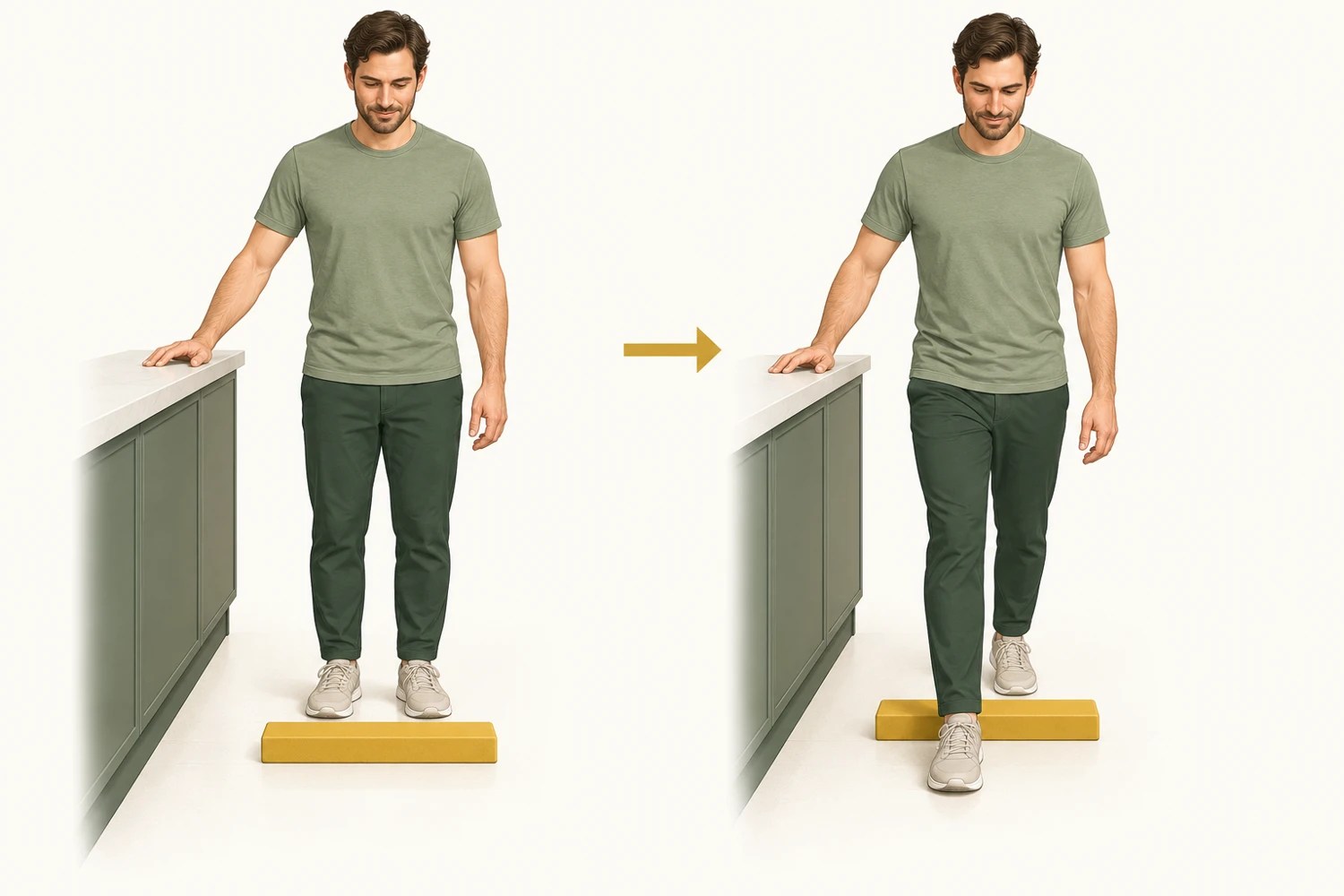
Best answer: C. Practice approach–turn–step sequences with support, a wider route and a manageable obstacle.
Practice a wider turn around a marker, then supported stepping over a low obstacle. Combine the sequence when appropriate; address identified capacity needs too.
Take it with you: Make the exercise resemble the difficult part—not just look difficult.
B. Remove support first so she has to rely on balance.
Check answer
Revisit your choice
Support can make useful practice possible. Its removal is not a prerequisite for improvement.
Best answer: C. Practice approach–turn–step sequences with support, a wider route and a manageable obstacle.
Practice a wider turn around a marker, then supported stepping over a low obstacle. Combine the sequence when appropriate; address identified capacity needs too.
Take it with you: Make the exercise resemble the difficult part—not just look difficult.
C. Practice approach–turn–step sequences with support, a wider route and a manageable obstacle.
Check answer
Best fit for these findings
Practice a wider turn around a marker, then supported stepping over a low obstacle. Combine the sequence when appropriate; address identified capacity needs too.
Take it with you: Make the exercise resemble the difficult part—not just look difficult.
Stage 3 · Review the follow-up
3. Is it time to make the obstacle higher?
Follow-up after the matched plan: Ruth manages the clinic sequence with fewer balance corrections, but the patio doorway is still difficult at home.
A. First review the home width, threshold, support and actual performance, then choose a relevant progression.
Check answer
Best fit for these findings
The remaining mismatch may be the turn, threshold or support arrangement. Recheck these conditions and coordinate a home-hazard review when indicated.
Take it with you: Progress toward the doorway she uses. Keep needed support and supervision; do not send her home to rehearse an unsafe challenge.
B. Increase obstacle height because the clinic task is easier.
Check answer
Revisit your choice
Height is useful only if it addresses the unmet demand. A taller obstacle may solve the wrong problem.
Best answer: A. First review the home width, threshold, support and actual performance, then choose a relevant progression.
The remaining mismatch may be the turn, threshold or support arrangement. Recheck these conditions and coordinate a home-hazard review when indicated.
Take it with you: Progress toward the doorway she uses. Keep needed support and supervision; do not send her home to rehearse an unsafe challenge.
C. Keep only isolated strengthening until the home route becomes easier.
Check answer
Revisit your choice
Strength can help a relevant deficit, but does not replace reviewing the route and practicing the task.
Best answer: A. First review the home width, threshold, support and actual performance, then choose a relevant progression.
The remaining mismatch may be the turn, threshold or support arrangement. Recheck these conditions and coordinate a home-hazard review when indicated.
Take it with you: Progress toward the doorway she uses. Keep needed support and supervision; do not send her home to rehearse an unsafe challenge.
Review Chapter 6 · Choose another case
Sources & learning scope
Fictional learning case informed by the Therapeutic Exercise class material and linked chapter. These are reasoned examples, not a complete patient examination or treatment protocol. Dose, guarding and progression require individual assessment; students work within supervision and the established plan of care.
CDC STEADI · NICE: falls assessment and tailored exercise
Reviewed October 29, 2026.

