
CASE 5 · ARTHRITIS · DOSE AND RESPONSE
Knee OA: where do I start when it hurts?
Elena, 64, has diagnosed knee OA and wants to rise from her dining chair to join family meals. Her PT finds reduced knee-extensor capacity and difficult chair rising. Screening identifies no acute joint concern; appropriately graded exercise is indicated.
Choose an answer, then check the reasoning. Open the next stage afterward; each update assumes the best-fit plan was followed.
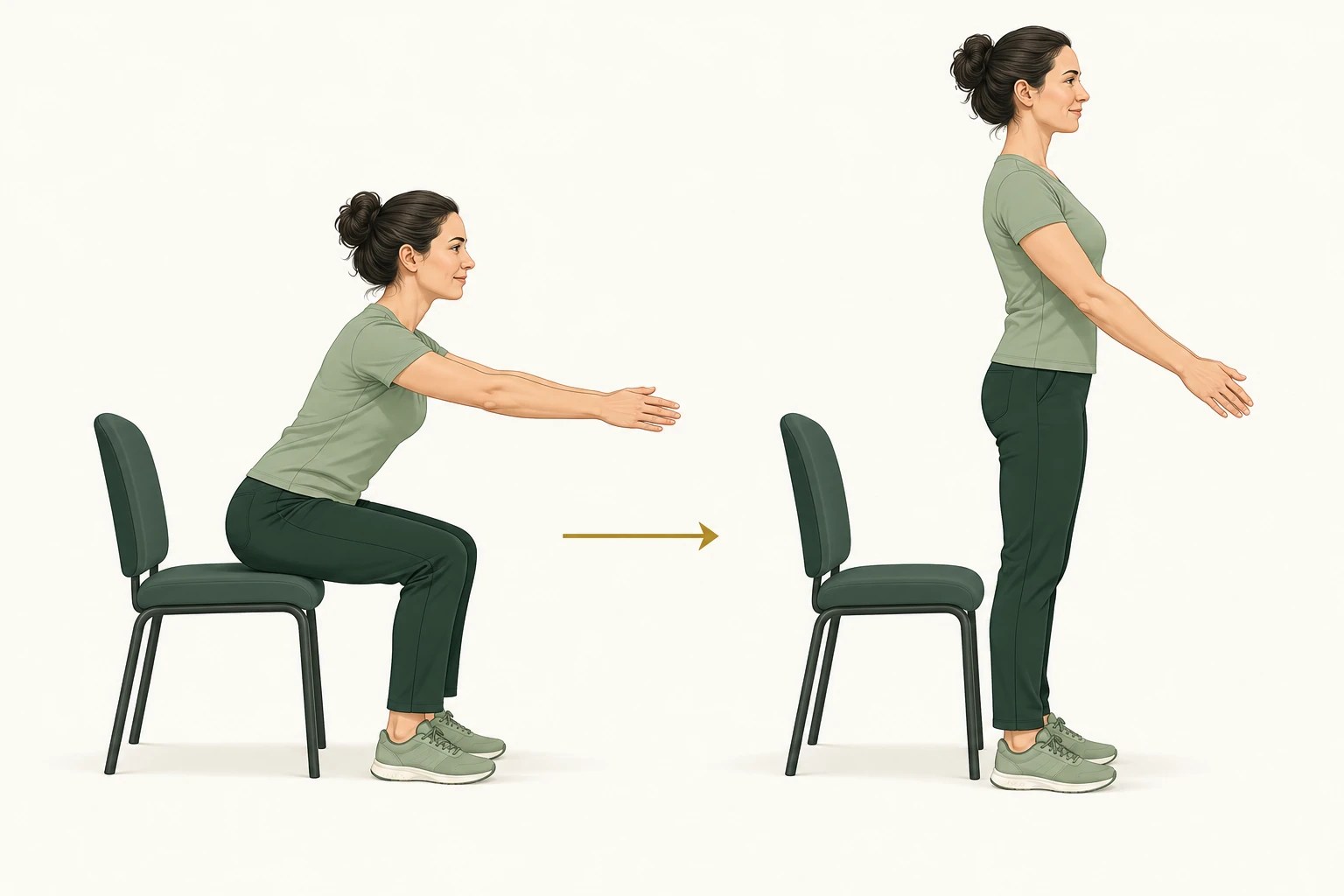
1. Which starting plan makes sense?
The dining chair is currently too demanding. Elena can rise from a higher stable chair using her hands.
A. Practice every attempt from the dining chair without hands to preserve specificity.
Check answer
Revisit your choice
The final task matters, but its full demand need not be the starting dose.
Best answer: B. Use supported rises from the higher chair plus appropriately dosed knee-extension exercise.
The higher chair makes task practice manageable; knee extension addresses the assessed capacity need. Choose repetitions, resistance and rests from performance and response.
Take it with you: Find a manageable version of the goal and give the strengthening a clear job.
B. Use supported rises from the higher chair plus appropriately dosed knee-extension exercise.
Check answer
Best fit for these findings
The higher chair makes task practice manageable; knee extension addresses the assessed capacity need. Choose repetitions, resistance and rests from performance and response.
Take it with you: Find a manageable version of the goal and give the strengthening a clear job.
C. Use knee-extension exercise alone until all knee discomfort disappears.
Check answer
Revisit your choice
Waiting for zero discomfort can postpone useful task practice. Isolated exercise alone does not establish transfer.
Best answer: B. Use supported rises from the higher chair plus appropriately dosed knee-extension exercise.
The higher chair makes task practice manageable; knee extension addresses the assessed capacity need. Choose repetitions, resistance and rests from performance and response.
Take it with you: Find a manageable version of the goal and give the strengthening a clear job.
Stage 2 · Use the new findings
2. How would you handle this response?
After the agreed starting plan, Elena reports mild familiar discomfort during practice. It settles to her usual level later that day; there is no new swelling, and her usual activities are unchanged.
A. Stop strengthening because discomfort proves the joint is being damaged.
Check answer
Revisit your choice
Discomfort alone does not establish structural damage. Interpret the overall response rather than one sensation.
Best answer: C. Review the agreed response plan; continuing the current dose may be reasonable.
This response may fit the individualized plan. Confirm recovery and function with Elena; modify if symptoms become unacceptable, persistently worse or otherwise concerning.
Take it with you: Some discomfort can occur with OA exercise. The response over time helps you judge the dose.
B. Increase load and repetitions immediately because the symptoms settled.
Check answer
Revisit your choice
Tolerating a starting dose does not mean multiple variables need an immediate increase.
Best answer: C. Review the agreed response plan; continuing the current dose may be reasonable.
This response may fit the individualized plan. Confirm recovery and function with Elena; modify if symptoms become unacceptable, persistently worse or otherwise concerning.
Take it with you: Some discomfort can occur with OA exercise. The response over time helps you judge the dose.
C. Review the agreed response plan; continuing the current dose may be reasonable.
Check answer
Best fit for these findings
This response may fit the individualized plan. Confirm recovery and function with Elena; modify if symptoms become unacceptable, persistently worse or otherwise concerning.
Take it with you: Some discomfort can occur with OA exercise. The response over time helps you judge the dose.
Stage 3 · Review the follow-up
3. What progression serves her goal?
After several sessions, higher-chair rises are controlled and recovery remains acceptable. Knee-extension performance improves, but Elena still cannot rise from the dining chair without help.
A. Trial a modestly lower stable chair with needed hand support and reassess the transfer.
Check answer
Best fit for these findings
Lowering the starting surface addresses the remaining task demand. Keep support as needed, then reassess the actual dining-chair setup.
Take it with you: A stronger quadriceps is useful. Getting out of her chair is the goal.
B. Add knee-extension weight and keep all chair practice unchanged.
Check answer
Revisit your choice
More resistance might help a remaining strength need, but is not automatically the best response to this task mismatch.
Best answer: A. Trial a modestly lower stable chair with needed hand support and reassess the transfer.
Lowering the starting surface addresses the remaining task demand. Keep support as needed, then reassess the actual dining-chair setup.
Take it with you: A stronger quadriceps is useful. Getting out of her chair is the goal.
C. Remove hand support and lower the chair in the same session before checking performance.
Check answer
Revisit your choice
Changing two demands at once can exceed current ability and makes the response harder to interpret.
Best answer: A. Trial a modestly lower stable chair with needed hand support and reassess the transfer.
Lowering the starting surface addresses the remaining task demand. Keep support as needed, then reassess the actual dining-chair setup.
Take it with you: A stronger quadriceps is useful. Getting out of her chair is the goal.
Review Chapter 8 · Choose another case
Sources & learning scope
Fictional learning case informed by the Therapeutic Exercise class material and linked chapter. These are reasoned examples, not a complete patient examination or treatment protocol. Dose, guarding and progression require individual assessment; students work within supervision and the established plan of care.
NICE: osteoarthritis exercise recommendations
Reviewed October 29, 2026.

